


The Southeast Asian (SEA) region, characterized by rapid economic growth, urbanization, and a burgeoning middle class, faces a complex and critical challenge: securing reliable, affordable, and sustainable electricity for its over 675 million people. The region's power sector is at a crossroads, grappling with the trilemma of energy security, cost competitiveness, and the imperative for decarbonization. This article examines the current state of electricity supply, the dynamics of energy pricing, the transformative role of solar power, and the pivotal trends shaping the region's energy future.
1.The Supply Landscape: Diversity with a Dominant Fossil Reliance
Southeast Asia's electricity generation mix remains heavily reliant on fossil fuels, which account for approximately 75-80% of total output. However, the composition varies significantly across countries:

Coal: Still the dominant workhorse, particularly in Indonesia, Vietnam, and the Philippines. Its relative affordability and perceived reliability make it a preferred choice for base-load power. However, new coal plant pipelines have sharply declined due to increasing international financing restrictions, environmental pressures, and the falling cost of renewables.
Oil: In the Southeast Asian context, oil plays a niche important role in power generation. Countries like Indonesia and the Philippines, with vast archipelagic geographies, rely heavily on oil-fired power plants (often diesel or fuel oil) for electrifying thousands of remote islands that are beyond the reach of the main national grids.
Natural Gas: Plays a crucial role as a cleaner-burning transitional fuel, especially in Malaysia, Thailand, Singapore, and Myanmar. It offers flexibility to complement intermittent renewables. However, domestic supply constraints (e.g., declining fields in Thailand and Myanmar) are leading to increased dependence on liquefied natural gas (LNG) imports, exposing countries to volatile global gas prices.
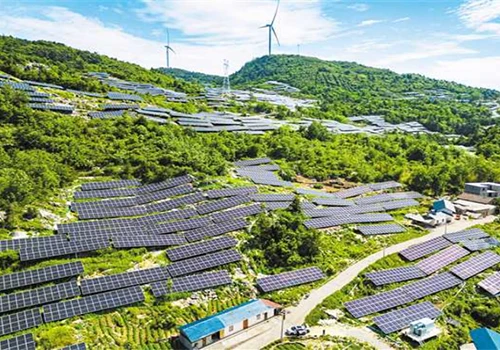
Renewables (Solar, Wind, Biomass, Geothermal): Growth is accelerating but from a low base. Vietnam has emerged as a regional solar and wind champion following successful feed-in-tariff schemes. The Philippines leads in geothermal, while Indonesia and Thailand are expanding solar and biomass. Grid integration and regulatory hurdles remain key challenges.
2.The Strategic Imperative: Unlocking the Solar Advantage
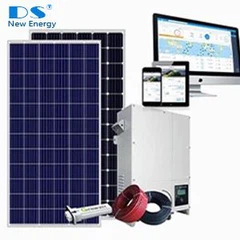
Amidst this transition, solar photovoltaic (PV) energy stands out as a cornerstone solution for Southeast Asia, offering a multitude of strategic benefits:

Abundant Resource: The region enjoys high solar irradiation, with most areas receiving 4-6 kWh/m²/day, making it one of the world's most suitable regions for solar power generation.
Rapid Cost Decline & Economic Competitiveness: The Levelized Cost of Energy (LCOE) for utility-scale solar has plummeted, becoming the cheapest source of new electricity generation in many parts of SEA, outcompeting new coal and gas-fired plants. This reduces long-term generation costs and exposure to fossil fuel price volatility.
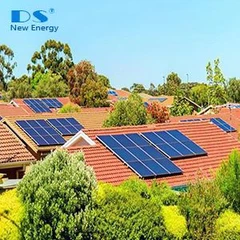
Modularity and Speed of Deployment: Solar projects, especially distributed rooftop systems, can be planned and built rapidly (often in months), providing a swift response to urgent power shortages. Their modular nature allows for scalable installation from residential kilowatts to utility-scale gigawatts.
Energy Security and Diversification: By harnessing a domestic, inexhaustible resource, solar power reduces dependency on imported fuels (coal, LNG), enhancing national energy security and insulating economies from global market shocks.
Grid Support and Rural Electrification: Distributed solar generation can alleviate stress on transmission grids and reduce losses. For remote and island communities, off-grid or mini-grid solar systems offer a cost-effective and rapid path to electrification, supporting inclusive development.
Low Environmental Footprint and Climate Alignment: Solar power generation produces no air pollution or greenhouse gas emissions during operation, directly supporting national climate commitments (NDCs) and improving local air quality and public health.
3.The Price: Subsidies, Markets, and Volatility
Energy pricing in Southeast Asia is a patchwork of regulated tariffs, subsidies, and nascent wholesale markets, profoundly impacting affordability and investment.
Regulated Tariffs and Subsidies: Many governments maintain control over end-user electricity tariffs to shield consumers and industries from high costs. Countries like Indonesia, Malaysia, and Vietnam have historically provided substantial fossil fuel subsidies. While this ensures short-term affordability, it drains fiscal budgets, discourages energy efficiency, distorts market signals, and slows the adoption of renewables.
Exposure to Global Commodity Markets: For countries reliant on imported coal (Philippines) or LNG (Thailand, Singapore), electricity generation costs are directly linked to global commodity price swings. The 2021-2022 global energy crisis, driven by post-pandemic demand and geopolitical events, led to severe financial strain for state-owned utilities forced to sell power below cost (e.g., Vietnam Electricity, EVN).
Moving Towards Market-Based Pricing: There is a slow but discernible shift towards cost-reflective pricing and liberalization. Singapore operates a fully liberalized wholesale market. The Philippines has an Wholesale Electricity Spot Market (WESM). Vietnam is piloting a competitive generation market, and Malaysia has implemented a hybrid market scheme. These mechanisms aim to improve efficiency and attract private investment but can lead to higher and more volatile consumer prices in the short term.
The Cost Competitiveness of Renewables: The Levelized Cost of Energy (LCOE) for utility-scale solar and onshore wind is now competitive with, or often cheaper than, new-build coal and gas plants in most of SEA. This economic reality is a primary driver for new capacity additions. However, system integration costs (grid upgrades, storage, flexibility) are not yet fully reflected in market designs.
4.Country Snapshots: Supply Mix and Price Dynamics
The following table provides a comparative overview of key aspects of the power sector in Southeast Asian countries:
Table: Power Supply and Energy Price Overview of Southeast Asian Countries
|
Country |
Dominant Power Sources (Approx.) |
Key Price Characteristics & Residential Tariff |
Solar Industry Status & Driver |
|
Vietnam |
Coal (~45%), Hydropower (~30%), Solar/Wind (~15%) |
Regulated, tiered tariff. ~8.5 US¢/kWh. Faced financial strain due to global coal price surge. |
Regional leader. Explosive growth from 2019-2021 due to FIT. Now transitioning to competitive auctions. Focus on rooftop and large-scale. |
|
Indonesia |
Coal (~62%), Gas (~18%), Renewables (mainly hydro/geo, ~12%) |
Heavily subsidized. Very low flat tariff ~6-10 US¢/kWh. Reform to reduce subsidies is politically sensitive. |
Emerging giant. Vast potential, but slow uptake. Recent focus on rooftop solar mandates for industries and public buildings, and utility-scale solar parks in Java/Bali. |
|
Thailand |
Natural Gas (~55%), Coal (~20%), Renewables (Solar/Hydro/Biomass, ~20%) |
Partially regulated with an automatic tariff adjustment mechanism. ~10-11 US¢/kWh. |
Early adopter. Strong legacy in rooftop and utility solar via "Adder" and later FIT schemes. Now shifting towards corporate PPAs and floating solar. |
|
Philippines |
Coal (~57%), Geothermal/Renewables (~22%), Gas (~12%) |
Deregulated generation, regulated distribution. High cost ~15-19 US¢/kWh due to reliance on imported coal. |
High-potential market. Competitive auctions driving utility-scale solar growth. Strong interest in solar+storage for island grids. High retail prices boost competitiveness of solar. |
|
Malaysia |
Natural Gas (~43%), Coal (~38%), Hydropower (~17%) |
Regulated via Incentive-Based Regulation (IBR) framework. ~7-9 US¢/kWh. |
Steady growth. Driven by Large-Scale Solar (LSS) tender auctions. Strong growth in commercial & industrial (C&I) segment via net energy metering (NEM) schemes. |
|
Singapore |
Natural Gas (~95%), Solar (~3%) |
Fully liberalized market. Retail competition. Tariff ~20-25 US¢/kWh (includes grid costs, carbon tax). |
Tech and finance hub. Limited land drives innovation in floating PV, vertical PV, and regional renewable energy imports via cross-border power lines and international carbon credits. |
5. Critical Trends and Future Pathways
The region's energy trajectory is being reshaped by several interconnected trends:
The Just Energy Transition: The commitment to net-zero pledges (by Singapore, Malaysia, Indonesia, Vietnam, Thailand) is driving policy. The Just Energy Transition Partnership (JETP) with Vietnam and Indonesia, mobilizing billions in public and private finance, exemplifies international efforts to accelerate coal phase-down and renewable deployment while addressing socio-economic impacts.
Demand Growth and Electrification: Electricity demand is projected to grow by around 5-6% annually. Rising electrification of transport (EVs) and industry will further strain existing grids and necessitate massive new investments in generation, transmission, and digitalization for smart grid management.
Investment Imperative: The ASEAN Centre for Energy estimates the region requires over $1.2 trillion in power sector investment by 2040 to meet demand and transition goals. Mobilizing private capital, improving bankable project pipelines, and de-risking investments are paramount.
Emerging Technologies: Battery energy storage systems (BESS) are becoming critical for grid stability to integrate high shares of solar and wind. Green hydrogen is explored for long-term decarbonization of hard-to-abate sectors. Digitalization, demand-side management, and distributed energy resources will redefine grid operations.
Southeast Asia's power sector is undergoing a profound transformation. Solar power, with its compelling economic and strategic benefits, is poised to be a central pillar of this new energy architecture. The era of relying solely on cheap, domestic fossil fuels for predictable growth is ending. The future supply mix will be more diversified, decentralized, and renewable-heavy.