
In the global transition to clean energy, variable renewable sources such as solar and wind offer tremendous potential but also present major challenges. Their intermittency-driven by weather, day-night cycles, and seasonal variations-often results in curtailment (wasted energy) or grid instability. Compressed Air Energy Storage (CAES) stands as a mature, large-scale solution that converts surplus electricity into compressed air for storage and releases it on demand to generate power, effectively absorbing and utilizing wind and solar energy while ensuring grid stability and balance.
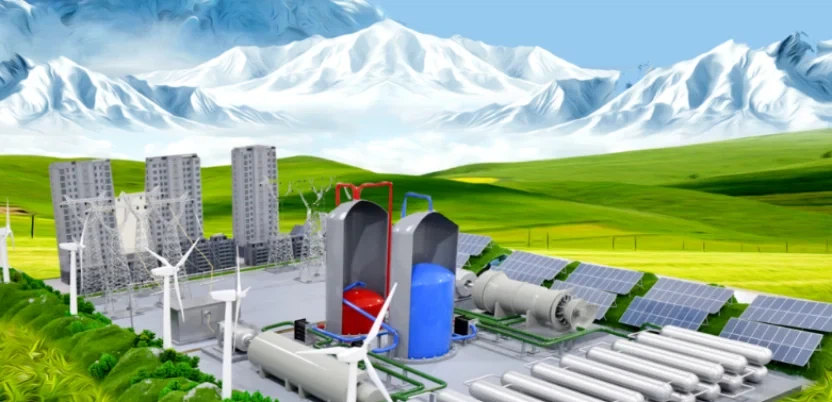
CAES stores electrical energy as mechanical potential by compressing air, enabling storage durations from hours to weeks with minimal losses. When needed, the compressed air is released to drive turbines and generate electricity. This technology is particularly well-suited for large-scale, long-duration storage, transforming intermittent renewables into dispatchable, reliable power that meets round-the-clock grid demands.
Underlying Technology and Principles
The core of CAES lies in the thermodynamics of gas compression and expansion. Air heats up during compression and cools during expansion. High efficiency depends on effective heat management:
Conventional (Diabatic) CAES: Compression heat is dissipated through intercoolers, and fuel (typically natural gas) is used to reheat the air before expansion. Round-trip efficiency is typically 40–55%.
Advanced Adiabatic CAES (AA-CAES): Compression heat is captured and stored in thermal energy storage (TES) systems-such as packed stone beds, molten salt, or thermal oil-for reuse during expansion. Efficiencies reach 70% or higher with no fossil fuel consumption.
Isothermal/Near-Isothermal CAES: Advanced heat exchangers or water sprays maintain near-constant temperatures during compression and expansion, with theoretical efficiencies of 80–95% in developmental systems.

Modern CAES plants operate at pressures of 4–7 MPa (40–70 bar) and rely on the ideal gas law for energy storage. Unlike batteries, CAES excels in long-duration, gigawatt-scale applications with negligible degradation over decades.
Key Equipment and Components
A typical CAES facility consists of:
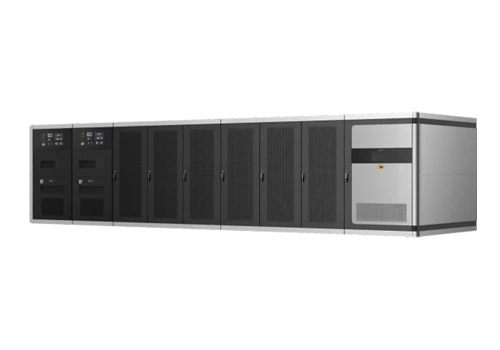
Compressors: Multi-stage electric turbo-compressors powered by surplus electricity, which pressurize ambient air using low- and high-pressure stages with intercooling.
Air Storage: Underground caverns (salt domes, depleted gas fields, or aquifers) or above-ground high-density artificial vessels (such as pipe arrays). Salt caverns are favored for their impermeability and pressure-cycling durability at depths of 300–1,500 meters.
Thermal Management System (in advanced designs): Heat exchangers and TES units that capture and store compression heat.
Expanders/Turbines and Generators: High- and low-pressure turbo-expanders coupled to generators. Conventional systems use a combustor for reheating; advanced adiabatic systems reuse TES heat.
Auxiliary Systems: Pressure controls, bidirectional motor/generators, and grid interconnection equipment.
|
No. |
Equipment Name |
Main Function |
Technical Features and Principles |
Supporting Illustration Description |
|
1 |
Compressors |
Charging-phase powerhouse: converts surplus electricity into compressed-air potential energy |
Multi-stage electric turbo-compressors (axial or centrifugal), operating at 4–7 MPa (40–70 bar), equipped with intercoolers and heat-recovery systems; variable-speed drives enable rapid response to renewable fluctuations |
Complete system layout highlighting the compressor train |
|
2 |
Air Storage Systems |
Long-duration storage of compressed air (hours to weeks) |
Underground salt caverns (300–1,500 m depth) or high-density above-ground pipe-array vessels; designed for repeated pressure cycling with near-zero leakage |
Cross-sectional diagram showing both underground cavern and surface thermal-management interface |
|
3 |
Thermal Management & Thermal Energy Storage (TES) Systems |
Capture, store, and reuse compression heat for high-efficiency, fuel-free operation |
Heat exchangers (HX1/HX2) paired with TES media (ceramic beds, molten salt, or thermal oil) storing heat up to 600 °C; closed-loop recovery achieves round-trip efficiencies above 70 % |
Charging-phase heat-flow schematic + full system integration diagram |
|
4 |
Expanders, Turbines & Generators |
Discharging-phase power plant: converts stored compressed air into electricity |
Multi-stage turbo-expanders (high- and low-pressure) directly coupled to synchronous generators; full load reached in under 10 minutes with zero combustion emissions in advanced designs |
Real-world expander-generator installation photograph |
|
5 |
Auxiliary Systems |
Ensure safe, efficient plant operation and grid integration |
Pressure-control valves, bidirectional motor-generators, SCADA monitoring, grid switchgear, cooling towers, and extensive piping networks |
Interior view of turbine hall showing integrated piping and electrical systems |
The modular design of CAES allows independent optimization of compression, storage, and expansion capacities, delivering operational flexibility unmatched by many other storage technologies.
Operational Processes
CAES operates in two primary phases:
Charging (Compression) Phase: During periods of high renewable output or low demand, surplus electricity drives the compressors. Air is compressed in multiple stages (heating up), cooled, and injected into storage. In advanced adiabatic systems, the extracted heat is stored in TES.
Discharging (Expansion/Generation) Phase: When demand peaks or renewables are insufficient, compressed air is released, preheated (using TES heat or supplemental fuel), expanded through turbines to drive generators, and exhausted as cooler air. The system can reach full load in under 10 minutes, making it ideal for grid balancing, frequency regulation, and spinning reserves.
Plants can cycle daily or seasonally with very low self-discharge rates. Established utility-scale examples include the Huntorf plant in Germany (321 MW, operational since 1978) and the McIntosh plant in the United States (110 MW, since 1991).
Real-World Case Study: 100 MW Advanced Compressed Air Energy Storage Demonstration Project
As a flagship example of successful CAES project execution, China's 100 MW advanced compressed air energy storage national demonstration project showcases the technology's maturity and large-scale application potential. Developed under the leadership of the Institute of Engineering Thermophysics, Chinese Academy of Sciences, it is the world's first 100 MW-class advanced CAES station and currently the largest and highest-efficiency advanced CAES plant in operation.
System Configuration Details:
Capacity: 100 MW power output / 400 MWh energy storage.
Technology Type: Advanced adiabatic CAES (AA-CAES) featuring supercritical thermal storage, supercritical heat exchange, high-load compression/expansion, and full system integration-completely eliminating fossil fuel dependency.
Storage Method: High-density artificial air storage vessels (pipe-array design), increasing energy density and reducing reliance on large underground caverns.
Efficiency: Round-trip efficiency of 70.4%.
Performance Parameters: Annual generation exceeds 132 million kWh, sufficient to meet peak electricity demand for approximately 50,000 households; saves 42,000 tons of standard coal and reduces CO₂ emissions by about 109,000 tons per year.
Key Equipment: Multi-stage compressors, turbine expanders/generator sets, supercritical TES thermal storage system, and high-pressure pipe-array storage vessels.
Location: Guyuan County, City, Hebei Province, within the Miaotan Cloud Computing Industrial Park; occupies approximately 5.7 hectares. The project was grid-connected in 2022 and has entered commercial operation preparation.

This project demonstrates our capability to successfully execute large-scale CAES initiatives by recovering compression heat, optimizing thermal management, and employing modular design to overcome traditional limitations in efficiency, fuel dependency, and site selection. It provides valuable real-world engineering validation and a scalable model for global renewable energy integration.

How CAES Facilitates Effective Absorption and Utilization of Wind and Solar Energy
The variability of wind and solar power frequently leads to surplus electricity that cannot be fully absorbed by the grid. CAES serves as a "shock absorber" for the grid, directly addressing this issue:
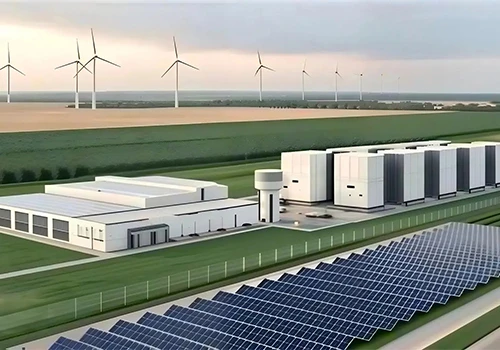
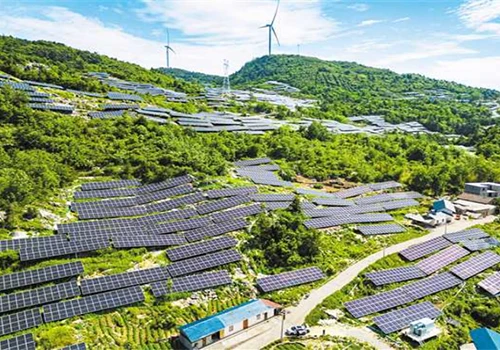
Absorbing Surplus Power: During strong winds or peak solar irradiance, excess energy is used to compress and store air underground, preventing curtailment.
Smoothing Output: CAES decouples generation from consumption, releasing stored energy during calm periods or after sunset to deliver stable, predictable power.
Grid Stability and Integration: Its rapid response supports frequency regulation, voltage control, and black-start services. Wind-solar-CAES hybrid systems create "virtual baseload" plants, reducing reliance on fossil-fuel peakers.
Economic and Environmental Benefits: CAES significantly lowers storage costs, improves renewable utilization rates, and cuts carbon emissions (especially in advanced adiabatic configurations). It is particularly competitive for large-scale, long-duration renewable integration.
Co-locating CAES with wind farms or solar stations optimizes transmission infrastructure and unlocks additional revenue through energy arbitrage, capacity markets, and ancillary services.

Looking Ahead: CAES as a Cornerstone of Renewable Energy Power Stations
CAES has evolved from its 1970s origins into a flexible, long-duration storage technology with gigawatt-hour-scale potential. Advanced adiabatic and isothermal variants eliminate fossil fuel use entirely, aligning perfectly with net-zero goals. Its scalability and geographic adaptability (where suitable geology exists) enable the conversion of intermittent wind and solar resources into reliable, high-value electricity.
Successful projects such as confirm that CAES technology is fully ready for commercial-scale deployment. By adopting CAES, the renewable energy sector can overcome its greatest challenge-variability-accelerating the clean energy transition and delivering economic resilience and energy security to utilities, industries, and communities worldwide. Ongoing projects in China and internationally signal that integrated wind-solar-CAES power stations are no longer a vision but a present reality-delivering clean, dispatchable electricity whenever and wherever it is needed.