
I. Project Overview
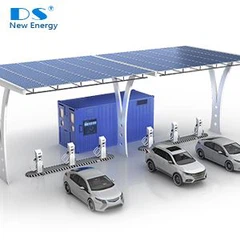
The PV Storage, Charging and Swap Station covers an area of approximately 1,600 square meters. It is an urban-level comprehensive energy demonstration station integrating photovoltaic power generation, energy storage peak shaving, liquid-cooled ultra-fast charging, DC fast charging, automatic battery swapping, and intelligent operation and maintenance. It has been rated as a high-quality typical case of people's livelihood practical projects for charging infrastructure in Zhejiang Province.
With the coordination of "source, grid, load, storage, charging and swapping" as the core, the project builds a low-carbon, efficient and safe urban energy supplement network, providing an integrated solution for new energy vehicle owners and power grid dispatching, filling the gap in regional comprehensive energy supplement, and setting a benchmark for the construction of new energy infrastructure in cities.


II. Core Technologies and Configuration
The station adopts a multi-technology integration model to realize in-depth coordination of photovoltaic, energy storage, charging and swapping systems. All technical configurations have reached the leading level in the industry, and the specific parameters are shown in the following table:
|
System Type |
Core Parameters |
Specific Configuration/Performance |
Core Advantages |
|
Photovoltaic Power Generation System |
Installed Capacity |
264kWp |
Integrated photovoltaic carport design, self-generation and self-use, surplus electricity storage, priority supply of green electricity for charging, greatly reducing the station's electricity cost and carbon emissions, and realizing efficient utilization of green electricity. |
|
Annual Power Generation |
198,000 kWh |
||
|
Installation Form |
Integrated Photovoltaic Carport |
||
|
Power Supply Mode |
Self-generation and self-use, surplus electricity storage |
||
|
Energy Storage System |
Total Capacity |
430kWh/200kW (2 units × 215kWh/100kW) |
Realizes peak shaving and valley filling, emergency backup power supply, load smoothing, and can participate in virtual power plant dispatching. It stores photovoltaic green electricity during the day and releases it for charging at night, relieving the peak pressure of the power grid and improving the stability of the station's power supply. |
|
Annual Charging Capacity |
218,000 kWh |
||
|
Annual Discharging Capacity |
191,000 kWh |
||
|
Operation Mode |
Peak-valley regulation, photovoltaic and energy storage coordination |
||
|
Charging and Swapping System |
Charging Terminals |
46 charging guns (including 480kW liquid-cooled ultra-fast charging, 120kW DC fast charging) |
Covers all scenarios of ultra-fast charging, fast charging and battery swapping, meeting the energy supplement needs of different vehicle models. It has high charging efficiency and fast battery swapping speed, improving the energy supplement experience of car owners and the turnover rate of parking spaces. |
|
Liquid-Cooled Ultra-Fast Charging Performance |
10 minutes of charging (20% → 80%), 5 minutes of driving range ≈ 300 kilometers |
||
|
Battery Swapping Facilities |
Automatic battery swapping station, 3-minute fast battery swapping |
||
|
Annual Electricity Consumption |
Approximately 3.4 million kWh for charging, approximately 550,000 kWh for battery swapping |
||
|
Power Supply, Distribution and Intelligent System |
Transformer Configuration |
2 units of 800kVA + 2 units of 630kVA |
Intelligent dispatching, realizing intelligent power distribution, remote monitoring, fault early warning, building a local virtual power plant, supporting vehicle-grid interaction, and ensuring the safe, efficient and low-carbon operation of the station. |
|
Core Platform |
EMS Intelligent Energy Management Platform |
||
|
Core Functions |
Intelligent power distribution, remote monitoring, fault early warning, data visualization |
||
|
Power Grid Coordination |
Local virtual power plant, supporting vehicle-grid interaction |
III. Technical Highlights
In-depth Integration of PV Storage, Charging and Swapping: Full coverage of multiple scenarios including photovoltaic direct supply, energy storage buffer, ultra-fast charging and battery swapping, greatly improving the self-use rate of green electricity, realizing efficient circular utilization of energy, and building a coordinated ecology of "source, grid, load, storage, charging and swapping".

Leading Liquid-Cooled Ultra-Fast Charging Technology: Adopting 480kW liquid-cooled ultra-fast charging technology, it has the advantages of high power, low loss and lightweight gun cable, compatible with 800V high-voltage platform models, greatly shortening the energy supplement time for car owners and improving energy supplement efficiency.

Efficient DC Bus Coordination: Optimizing the system architecture, adopting DC bus coordination design, reducing energy loss during AC-DC conversion, the overall system efficiency is ≥ 95%, and improving energy utilization efficiency.

Grid-Friendly Design: Realizing peak shaving and valley filling through the energy storage system, reducing the demand for transformer capacity expansion, and participating in power grid dispatching as a local virtual power plant, improving power grid stability and realizing benign interaction with the power grid.
Full-Scenario Convenient Services: Adopting a 24-hour unattended operation mode, supporting a zero-carbon cabin (providing rest, drinking water and simple meal services) and self-service car washing facilities, providing car owners with a one-stop energy supplement + convenient service experience.

IV. Project Value
1. Social Benefits
It effectively alleviates the pain points of long queues for charging and inconvenience of battery swapping for new energy vehicle owners in cities, and improves the urban energy supplement network; promotes the zero-carbon transformation of public parking lots, and helps the construction of new urban infrastructure; sets a benchmark for urban comprehensive energy services and provides demonstration and guidance for regional new energy development.

2. Economic Benefits
Photovoltaic self-generation and self-use greatly reduce the station's electricity expenses and operating costs; the energy storage system increases the station's additional income through peak-valley arbitrage; the high-power charging and fast battery swapping mode improves the turnover rate of parking spaces, further improving the station's operating efficiency and realizing sustainable profitability.
3. Environmental Benefits
It consumes approximately 198,000 kWh of photovoltaic green electricity annually, replacing traditional thermal power consumption, reducing carbon emissions by approximately 158 tons annually (equivalent to planting about 8,700 trees), helping to achieve the "dual carbon" goal and improving the regional ecological environment.

V. Applicable Scenarios
The project has a mature and highly replicable model, which can be directly promoted to the following scenarios:
Public parking lots in urban core areas
Transportation hubs, expressway service areas
Industrial parks, commercial complex parking lots
Specialized stations for public transport, online car-hailing and logistics vehicles
VI. Summary
With leading technical configuration, improved service system and stable operation mode, the PV Storage, Charging and Swap Integrated Station has become a benchmark for urban-level PV storage, charging and swapping integrated projects that are implementable, replicable and profitable. The project not only solves the pain points of energy supplement for new energy vehicle owners, but also achieves multiple goals of efficient energy utilization, coordinated power grid development and low-carbon environmental protection, providing a reference standard solution for China's new energy infrastructure construction and comprehensive energy services.