
What Is Base Transceiver Station (BTS)
A base transceiver station (BTS) is a piece of network equipment that facilitates wireless communication between a device and network.
A BTS consists of the following:
Antennas that relay radio messages
Transceivers
Duplexers
Amplifiers
A BTS is also known as a base station (BS), radio base station (RBS) or node B (eNB).

Energy Consumption In BTS
The largest energy consumer in base stations is the radiofrequency equipment (power amplifier plus the transceivers and cables), which consumes approximately 65% of the total energy. Among the other components of the base station, the important energy consumers are air conditioning (17.5%), digital signal processor (10%), and the AC/DC converter (7.5%).

Why Solar PV System For BTS
Conventional energy systems are no longer sustainable.
Locations in isolated rural areas with no access to the electricity grid.
Increasing fuel prices (between € 0.90 and € 1.10 per kWh).
Ever growing O&M costs.
Operation guarantee.
Service independence and cost control.
Reduction of noise pollution and CO2 emissions.
Solar PV System Solution
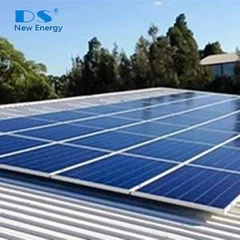
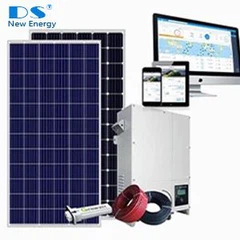
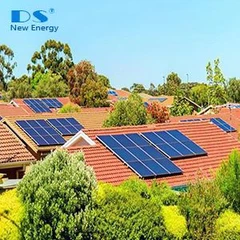
Solar Photovoltaic system for base station consists of photovoltaic modules, Mounting structure, junction boxes, charge controller, battery pack and inverter and so on.

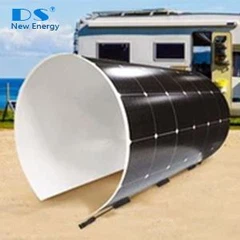
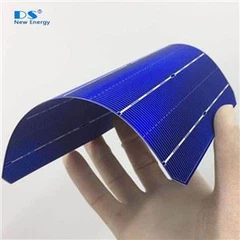
A photovoltaic module usually uses monocrystalline silicon or polycrystalline silicon cells, and a single cell has an output voltage of 0.5V. As a module is mainly composed of 72 pieces of solar cells in series, two modules should be connected serially to get output voltages ranging from 43.2V to 56.4V. Modules with relatively large capacities such as 330W, 375W, 450W, 540W,600W and 660W are preferred. The quantity of parallel connected modules depends on load capacities and solar power resources.
Photovoltaic modules are supported by Mounting structure, which fix the modules at a certain angle. Independent photovoltaic system should be placed at an angle of 5-15 degrees higher than the latitude of the site for maximum solar radiation in winter so as to reduce the number of batteries and the cost of the whole power system.
OPzS battery used to be the choice of solar power system as it employs positive tubular plates that can prevent the active material from falling off and thick pasted negative plates that ensure a long service life. However, OPzV with positive tubular plates gradually become popular in recent years as less maintenance is needed.
Multi-channel controller is used in charge/discharge management, and solar array is divided into several sub-arrays, which are connected to the controller via conjunction box. When battery is fully charged, the controller will cut off solar sub-arrays one by one; then battery and the rest of the photovoltaic sub-arrays provide power for the loads together. When the voltage of the battery falls to the set value, the controller will reconnect solar sub-arrays one by one to adjust the charging voltage and current of the battery.