The rapid expansion of large language models and generative AI has sparked a global construction boom for Artificial Intelligence Data Centers (AIDCs). Gigantic GPU clusters run nonstop 24/7, driving an exponential rise in electricity consumption. Traditional thermal power supply now faces three major bottlenecks: tightening carbon emission constraints, soaring power costs, and lagging grid capacity expansion.
PV and AIDCs share a natural mutually beneficial logic. On one hand, PV delivers low-carbon electricity to high-density computing clusters to meet carbon compliance requirements and cut operational costs. On the other hand, AIDCs maintain stable, rigid power demand around the clock, perfectly resolving long-standing PV industry pain points such as midday power surplus, zero generation at night, and renewable energy curtailment. This creates a closed-loop industrial cycle linking power generation and computing consumption.

Global Typical PV Green Power AIDC Projects
North America
North America hosts the world's largest concentration of AI computing capacity. Google, AWS, and Meta have comprehensively deployed PV supporting facilities, adopting two mainstream models: long-term Power Purchase Agreements (PPAs) and self-owned PV-storage power stations.
1.Google
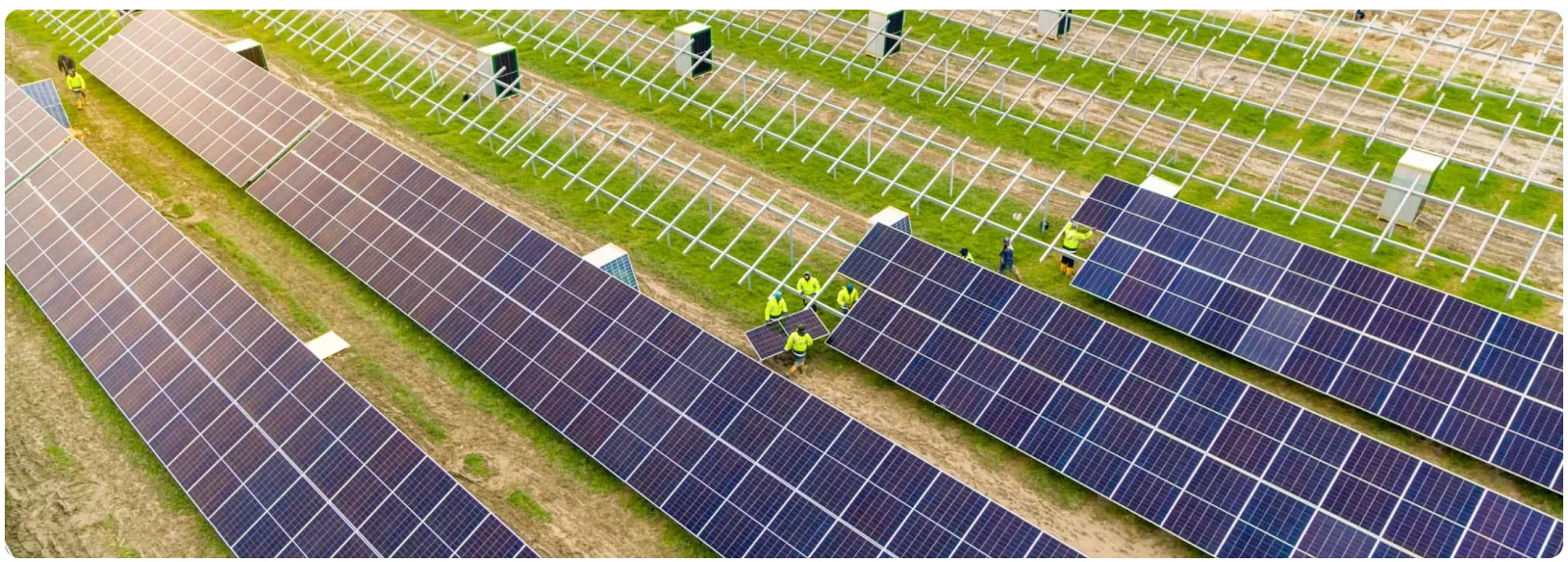
Google launched a 1 GW dedicated PV project in Texas, combining the 805 MW Wichita and 195 MW Mustang Creek PV power plants under a 15-year green power PPA. The project will generate 28 TWh of electricity over the contract term to fully supply AIDC clusters for large model training in Texas. Meanwhile, Google completed the acquisition of 2.2 GW of operational and under-construction PV assets plus 2.4 GWh of energy storage. Its self-built PV stations directly feed AIDC parks in Virginia and Texas, equipped with an 800 V high-voltage direct current (HVDC) PV-storage system. Energy storage stabilizes instantaneous power fluctuations of GPU clusters, eliminating reliance on purchased renewable energy certificates (RECs) and enabling self-sufficient PV power supply for computing workloads.
https://datacenters.google/intl/zh-CN_ALL/operating-sustainably/
2.Amazon AWS
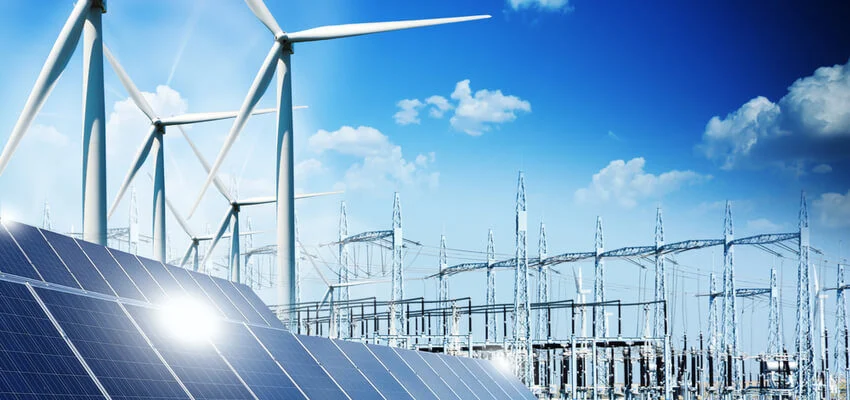
AWS plans a 1.2 GW PV plus 1.2 GWh energy storage project in Oregon exclusively serving local AI training clusters. The Reno AI computing park in Nevada is supported by a 600 MW ground-mounted PV array with matching energy storage, where PV covers 70% of daytime power demand for liquid-cooled computing loads. Leveraging abundant desert sunlight to lower electricity expenses, AWS targets a PV green power ratio of over 75% across the park.
3.Meta
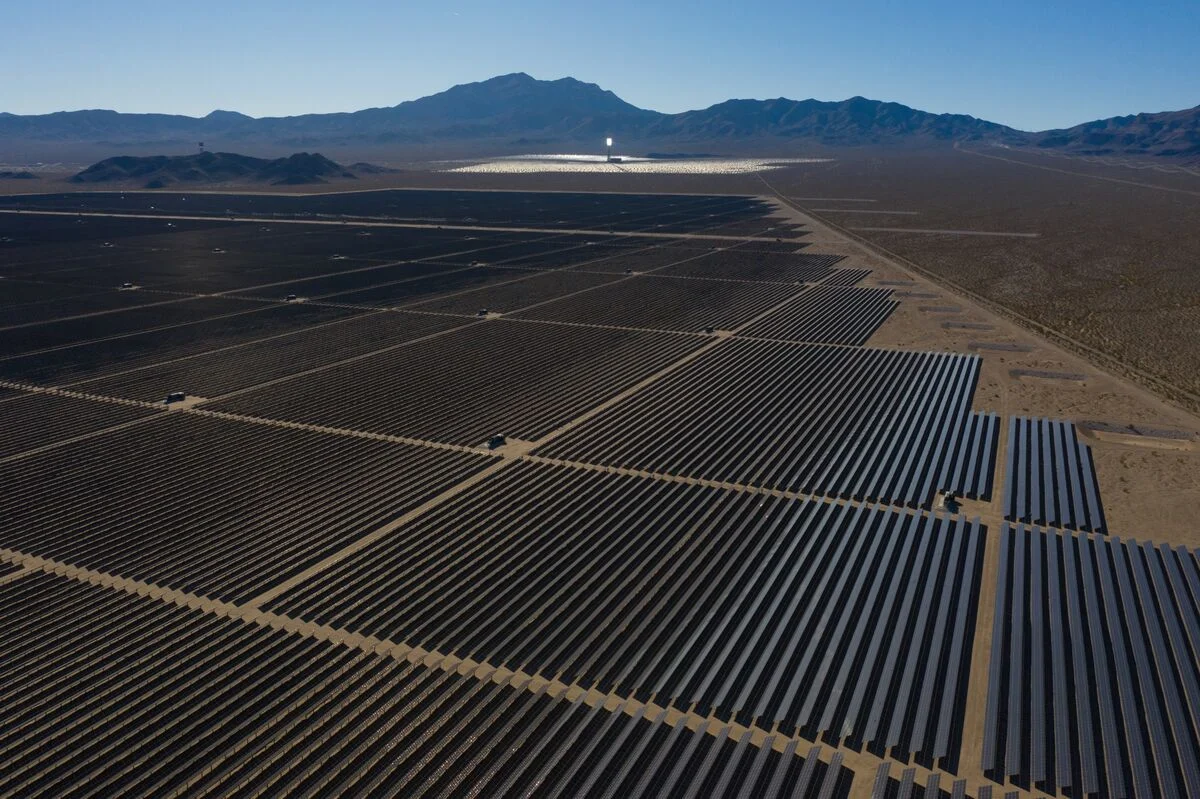
Meta's fully PV-powered AI data center in Huntsville, Alabama, is fully operational. With a total investment of USD 1.5 billion, the facility serves as the core training base for the Llama series of large models. Supported by a dedicated ground-mounted PV power plant, the site runs entirely on renewable energy dominated by PV, achieving a PUE as low as 1.12. On-site PV generation fully offsets peak daytime computing loads.
https://www.cnbeta.com.tw/articles/tech/1475214.htm
4.Independent Gigantic Computing Campus
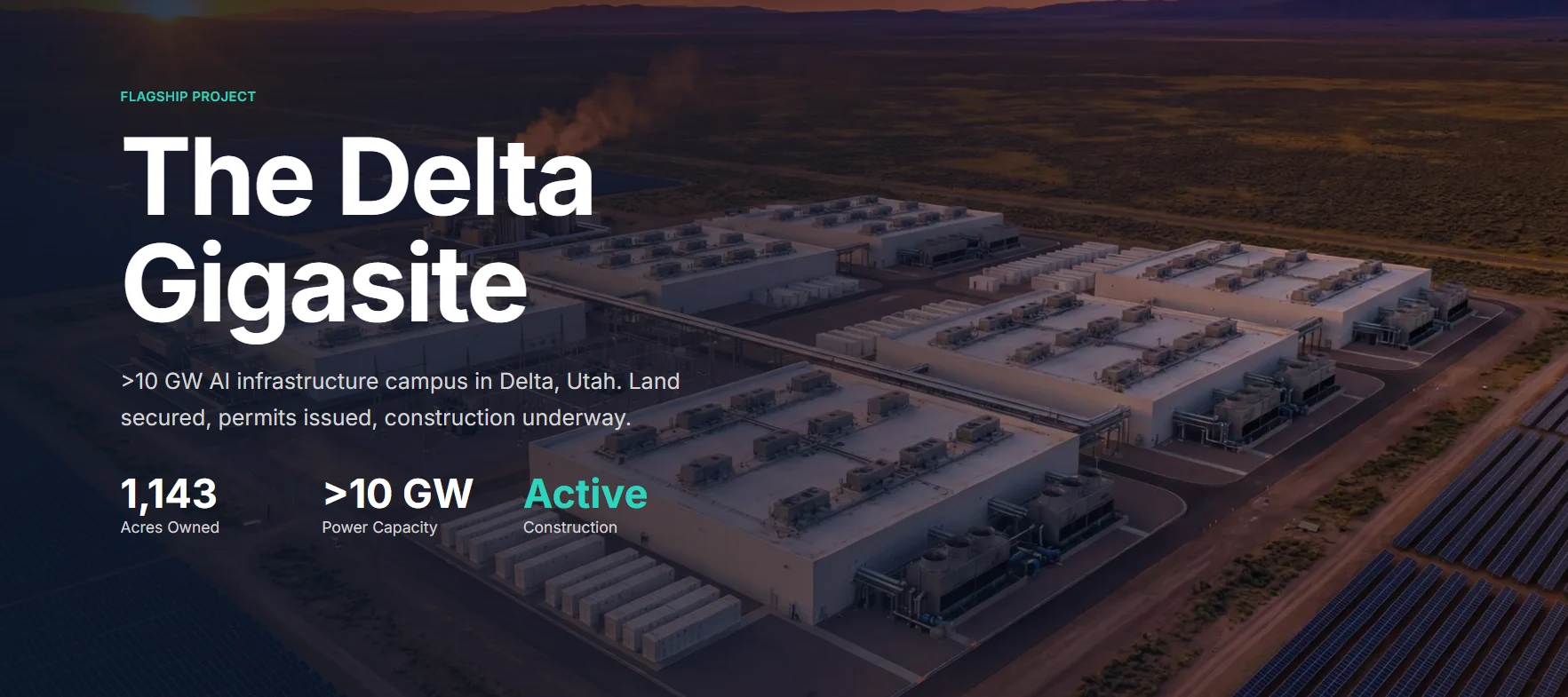
The Delta Gigasite in Utah, a planned 10 GW total power capacity supercomputing hub, will deploy 280 MW of desert PV paired with long-duration energy storage. Designed to meet NVIDIA's GW-Scale AI Factory standards, Desert PV will act as the primary daytime power source to drastically reduce the overall energy cost of computing operations.
The Middle East
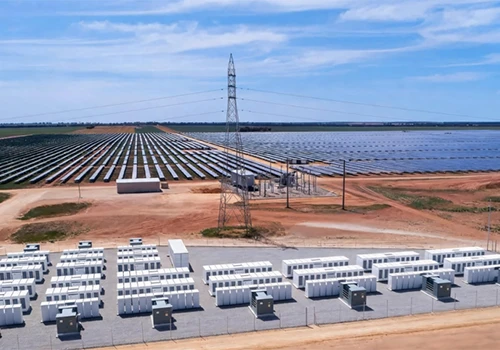
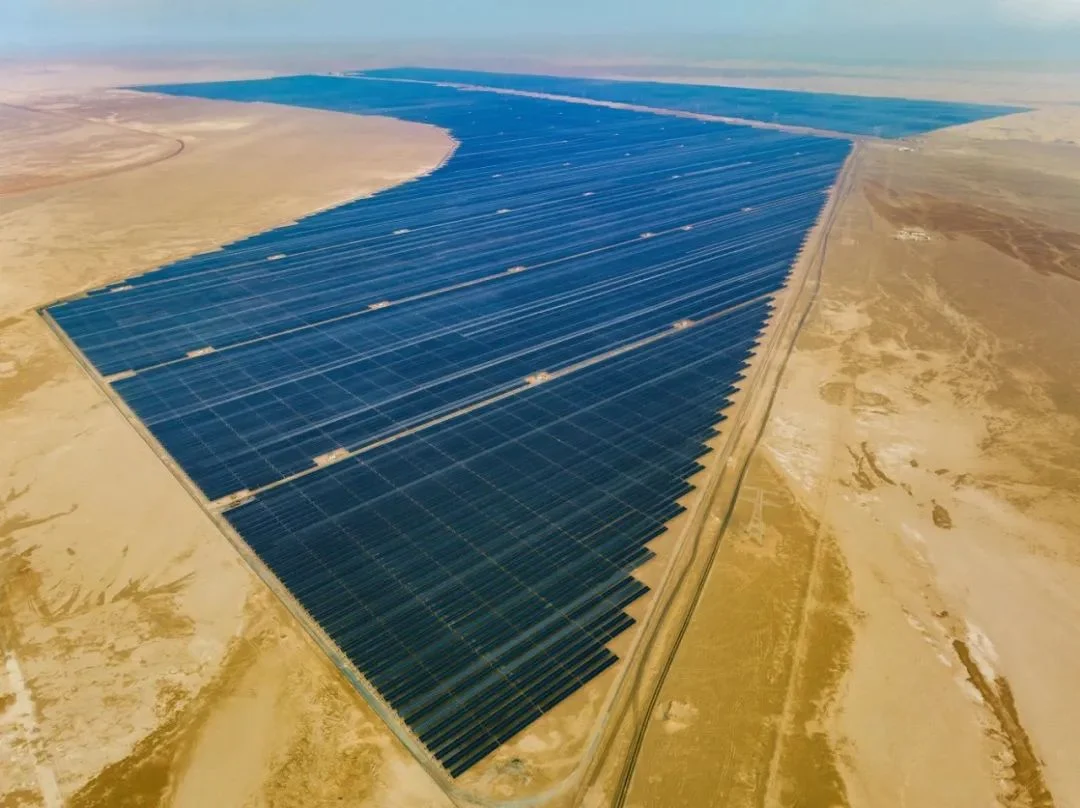
Endowed with intense solar irradiance, the Middle East has built benchmark zero-carbon computing infrastructure centered on gigawatt-scale PV paired with GWh-level long-duration storage. Abu Dhabi, UAE, plans a 5.2 GW large ground-mounted PV facility coupled with 19 GWh of long-duration storage, delivering a constant 1 GW of stable electricity exclusively to local AI supercomputers.
Adopting an over-sized PV array plus a large-capacity storage design, the system prioritizes direct PV power supply to computing clusters during peak sunlight hours, while excess electricity is stored for round-the-clock discharge after dark. With a power supply reliability of 99.6%, this is the world's first large-scale AIDC project capable of sustained 24-hour power delivery from PV and storage, supporting general large models and intelligent computing for the oil and gas sector.
China
Supported by abundant desert and Gobi PV resources and the national East-to-West Computing Transfer strategy, China has developed the world's largest portfolio of demonstration AIDCs powered by direct PV supply, falling into three replicable models: dedicated high-voltage lines from large-scale desert PV bases, distributed rooftop and mountain PV, and integrated source-grid-load-storage microgrids.
Zhongwei, Ningxia: China's First Liquid-Cooled AI Computing Hub with 100% Direct PV Supply
Commissioned in May 2026. The hub is supported by a 500,000 kW Gobi PV power station connected to computing rooms via a dedicated 220 kV transmission line to eliminate grid transit losses. With tens of thousands of PetaFLOPS of computing capacity supporting large model training for Tencent and Meituan Cloud, the facility generates 1.2 billion kWh of PV electricity annually and achieves a PUE of 1.15, standing as a national official demonstration project for coordinated computing and power generation.
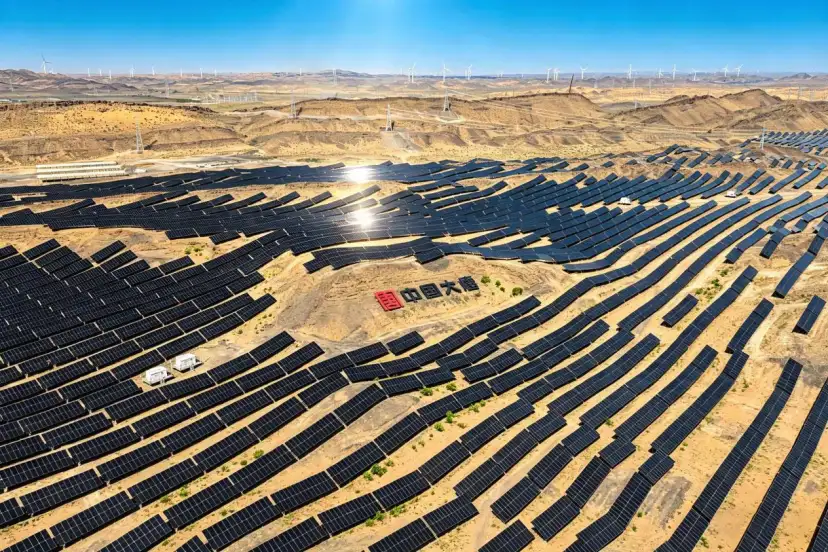
2.Sanjiangyuan Green Power Computing Park, Qinghai (Cooperated with Alibaba Cloud)
The park integrates rooftop distributed PV with external Gobi PV bases, forming a wind-solar-storage microgrid supplied entirely by renewable energy. Its 150,000 PetaFLOPS computing cluster draws 85% of its daytime power from PV; surplus electricity is stored to sustain uninterrupted AI inference workloads overnight.
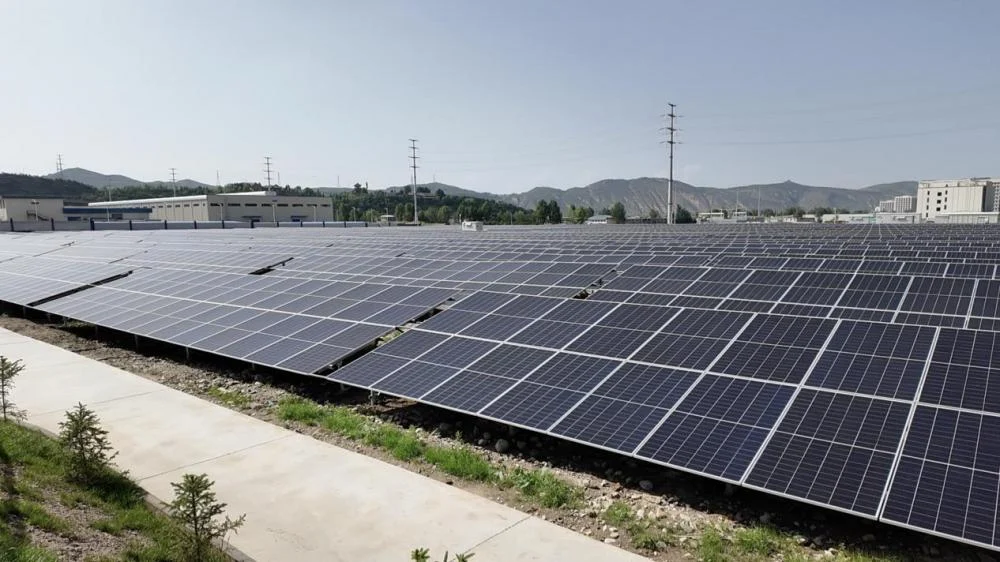
3.Shaoguan Computing Hub in the Guangdong-Hong Kong-Macao Greater Bay Area
Local policies mandate a minimum 80% PV green power ratio for all newly built AIDCs. Mountain PV paired with energy storage delivers dedicated power to Tencent's 30,000-rack AI computing cluster, while Huawei has launched an integrated PV-storage-computing pilot. Complementary distributed rooftop and ground-mounted PV systems match fluctuating power demands of high-density GPU clusters.
Four Main Deployment Models of PV Power for AIDCs Based on Global Practices
Global projects have standardized four replicable PV deployment models for AIDCs, adaptable to varying regional resources, computing scales, and construction conditions:
1.Large-Scale Ground-Mounted Desert PV with Dedicated Direct Transmission Lines (Preferred for Super-Sized Computing Parks)
Gigawatt-scale PV power stations are constructed on wastelands in western China, the Middle East, and the western United States, connected to computing campuses via exclusive 220 kV / 500 kV high-voltage lines. Bypassing multi-stage voltage transformation on public grids cuts transmission losses by over 30% and drastically reduces levelized electricity costs. Representative projects include the Zhongwei computing hub, the Abu Dhabi AI supercomputing center, and the Delta Gigasite in Utah.
Advantages: Massive power generation capacity, stable electricity pricing, and capable of supporting ten-thousand-GPU super-scale clusters.
Limitations: Requires extensive idle land, which is unfeasible in dense urban cores.
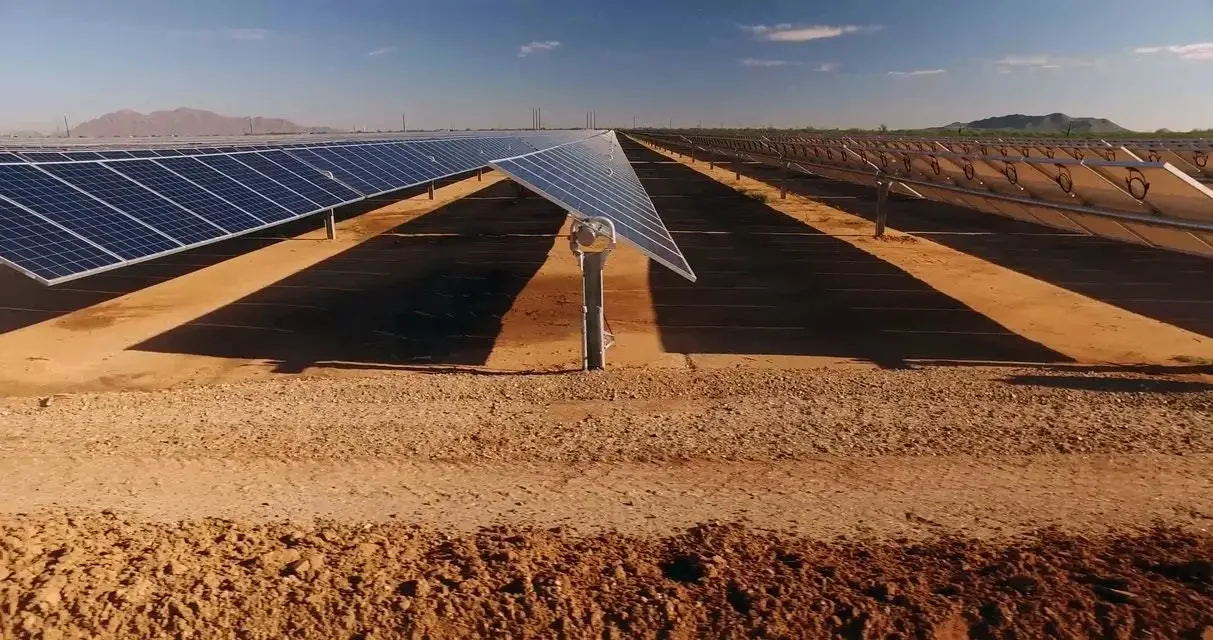
2.Long-Term PV Power Purchase Agreements (Preferred for Rapid Expansion by Internet Giants)
Computing operators sign 10–15-year long-term power contracts with new energy developers to lock in fixed PV power volumes without building independent power stations, ideal for fast computing capacity expansion. Representative projects: Google's Texas PV project and Meta's Huntsville computing campus.
Advantages: Low upfront capital expenditure and a short construction timeline.
Limitations: Limited independent control over the power supply; supplementary renewable energy certificates are required to meet carbon targets.

3.On-Site Distributed PV + Medium-Scale Energy Storage (For Small-to-Medium Urban AIDCs)
PV panels are installed on data center rooftops and parking lots, paired with MWh-level energy storage to form campus microgrids as supplementary power to municipal grids, meeting local renewable energy ratio requirements. Representative projects: Shaoguan Greater Bay Area computing hub, small urban edge inference computing centers.
Advantages: Flexible land requirements and streamlined approval processes.
Limitations: Restricted power output, only covering 30%–60% of daytime computing loads.
4.Closed-Loop Integrated Source-Grid-Load-Storage Microgrids (Flagship Zero-Carbon Projects):
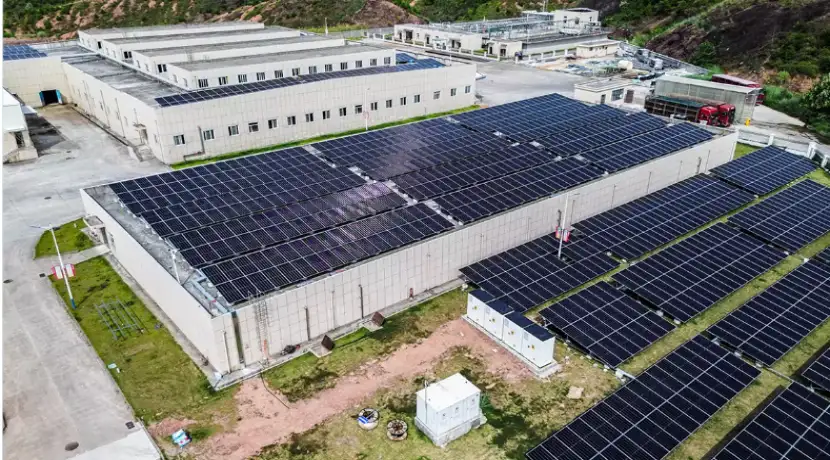
PV, energy storage, power transformation, and computing campuses are planned and built simultaneously with an AI intelligent dispatching platform, forming a fully closed loop of PV generation, energy storage buffering, and computing consumption that can operate off-grid with nearly 100% on-site renewable self-sufficiency. Representative projects: Pantheon AI Campus in Croatia, Sanjiangyuan Computing Park in Qinghai.
Advantages: Optimal carbon reduction performance, eligibility for grid peak shaving and power arbitrage.
Limitations: Heavy asset investment and an extended overall construction cycle.
Core Integrated PV-Storage-Computing Technologies: Resolving Mismatches Between PV Generation and Computing Demand
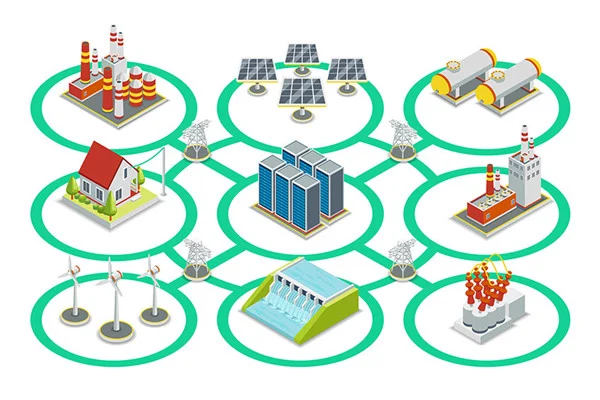
PV power's intermittency and volatility inherently conflict with AIDCs' requirement for a stable, uninterrupted 24/7 power supply. Global projects mitigate this tension via three core technological pillars: energy storage buffers, 800 V HVDC power distribution, and collaborative AI dispatching for computing and power assets.
Mandatory Energy Storage as a Buffering Carrier:
All AIDCs with megawatt-scale PV deploy energy storage to create a time-matching mechanism: PV power prioritizes GPU clusters during sunlight hours, while surplus power is stored; storage discharges at full capacity to carry full loads after dark. The Abu Dhabi project uses 19 GWh of long-duration storage, capable of independently sustaining 1 GW of computing power for 19 hours without interruption. Domestic Chinese projects typically deploy storage with a 4–8 hour capacity to eliminate power outage risks for computing workloads.
Integrated 800 V HVDC PV-Storage Power Distribution
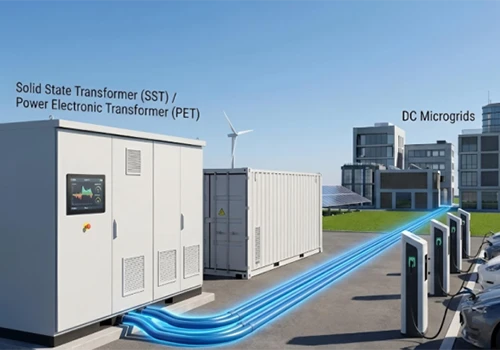
Traditional alternating current (AC) distribution suffers high energy losses and limited compatibility with high-density computing loads. Next-generation AIDCs universally adopt an 800 V direct current architecture, where PV arrays, energy storage, and liquid-cooled computing loads connect directly via DC links. This eliminates repeated AC-DC conversion cycles, cutting overall energy losses by over 15% while enabling rapid response to instantaneous GPU power spikes during large model training.
AI Collaborative Dispatching Platform for Computing and Power Assets
Proprietary AI algorithms embedded within the platform generate real-time forecasts of PV output and computing load curves, dynamically adjusting storage charging and discharging power to align PV generation and computing demand at the minute-level granularity. Storage charges during low computing loads and discharges during demand peaks; excess PV power can be fed back to the grid to participate in virtual power plant operations, delivering dual benefits of reduced electricity expenses and extra revenue from surplus power. AIDCs are evolving from traditional high-consumption power loads into flexible adjustable resources for the new power system.
Conclusion
Against the dual backdrop of global carbon neutrality targets and explosive growth in AI computing infrastructure, PV green power has evolved from an optional auxiliary facility into a core energy foundation sustaining the sustainable development of artificial intelligence. Global real-world projects-from long-term PV power purchase programs operated by North American tech giants, to gigawatt-scale desert PV-storage supercomputing hubs in the Middle East, and million-kilowatt direct-supply PV computing clusters under China's East-to-West Computing Transfer Initiative-fully validate the technical feasibility and economic viability of the integrated PV-storage-computing model.
With continuous technological advances in energy storage, HVDC power distribution, and intelligent dispatching, alongside maturing global policies for coordinated computing and renewable power, PV will be deeply embedded within worldwide AI computing infrastructure. This transition will resolve the twin challenges of high carbon emissions and excessive operational costs for computing facilities, while unlocking a trillion-dollar new growth market for the PV industry. Ultimately, it will drive synergistic progress between the digital economy and global energy transition, laying the groundwork for a zero-carbon, sustainable global artificial intelligence industrial ecosystem.