

Storing excess solar PV power is critical to getting the most out of any solar panel system and can save costs, improve grid efficiency and reduce fossil fuel emissions.
Hybrid inverter, DC-coupled, AC-coupled Solar Energy Storage
There are three primary setups for solar plus battery storage installations; Hybrid inverter, or DC-coupled systems , or AC-coupled systems.
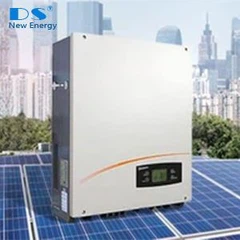
Hybrid inverters are the latest technology and the easiest to make solar energy storage systems. A hybrid inverter is an integrator of an inverter and a charger.
DC-coupled storage systems are the setup for new solar panel systems. In this type of install, a charge controller regulates the DC power from the solar panels to prevent the batteries from overcharging. DC coupled systems are typically less pricey because only one inverter is needed.
AC-coupled systems are common for existing solar installations. One of the reasons for this is that the existing connection from the solar panels to the inverter does not need to be rewired. Instead of needing a charge controller, the grid-tied inverter controls the DC flow.
Advantages of Lithium-Ion Over Lead Acid Batteries
Compact and light-weighted.
With 4 times the energy density compared to lead acid.
The service life is about 3 times longer.
Require no maintenance.
Require much less space due to higher energy density.
Much more reliable.
Easy to scalable.
Typical storage 5kWh 10kWh 15kWh 20kWh 30kWh
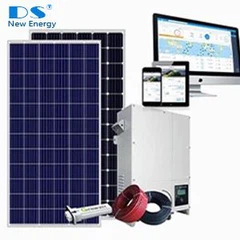
Normally hybrid solar system consists of
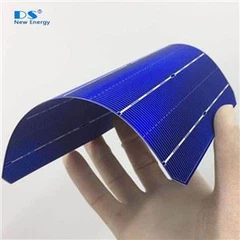
1 Solar panels
2 Mouting structure for solar panel
3 Hybrid storage inverter
4 Battery
5 Accessories
Storage 5kWh | Storage 10kWh | Storage 15kWh | Storage 20kWh | Storage 30kWh | |
Solar panel | 3kW | 5kW | 10kW | 10kW | 15kW |
Mounting structure | 3kW | 5kW | 10kW | 10kW | 15kW |
Hybrid inverter | 3kW | 5kW | 10kW | 10kW | 15kW |
Lithium-ion battery | 5kWh | 10kWh | 15kWh | 20kWh | 30kWh |