

Why lithium batteries need a management system
Lithium-ion batteries are widely used in different scenarios due to their many advantages, such as high operating voltage, small size, light weight, high energy density, no recall effect, no pollution, low self-discharge, and long cycle life.
Compared with nickel-metal hydride batteries, lithium-ion batteries are 30% to 40% lighter and have a 60% higher energy density. However, lithium-ion batteries also have serious disadvantages. In summary, there are two aspects:
(1) Safety Lithium-ion batteries have disadvantages such as poor safety and explosion. In particular, lithium-ion batteries with lithium cobalt oxide as the positive electrode material cannot discharge large currents and have poor safety. In addition, overcharging or over-discharging of almost all types of lithium-ion batteries will cause irreversible damage to the battery. Lithium-ion batteries are also very sensitive to temperature: if used at too high a temperature, they will cause electrolyte decomposition, combustion, or even explosion. Low temperature can cause the function of lithium-ion batteries to deteriorate, affecting the normal use of equipment. When multiple batteries are used in series, the charge and discharge rates of each battery are inconsistent, resulting in low battery capacity utilization. In view of this, lithium-ion batteries generally require a special protection system in actual use to monitor the health of the battery and thus handle the use of lithium-ion batteries. Figure 1 shows a lithium-ion battery after electrolyte differentiation.
(2) Protection The low-temperature capacity attenuation of lithium-ion batteries and the inability to accurately predict power reduce the protection of the equipment. Batteries must be replaced regularly when online for a long time, and remote monitoring equipment operates at dispersed sites with long distances between sites, so replacing batteries is a huge and expensive task. In order to reduce the amount of protection and reduce the cost of protection, the battery processing system is required to have the function of accurately judging the battery charging status, accurately grasping the battery charging status, and performing battery replacement operations more targetedly; at the same time, the battery processing system is required to have low power consumption to reduce the protection frequency and extend the battery life.
Therefore, a reasonable design of the battery management system is of great significance for long-term and long-distance monitoring of power status.
Architecture of BMS for large scale energy storage
Picture source: www.china-gold.com/
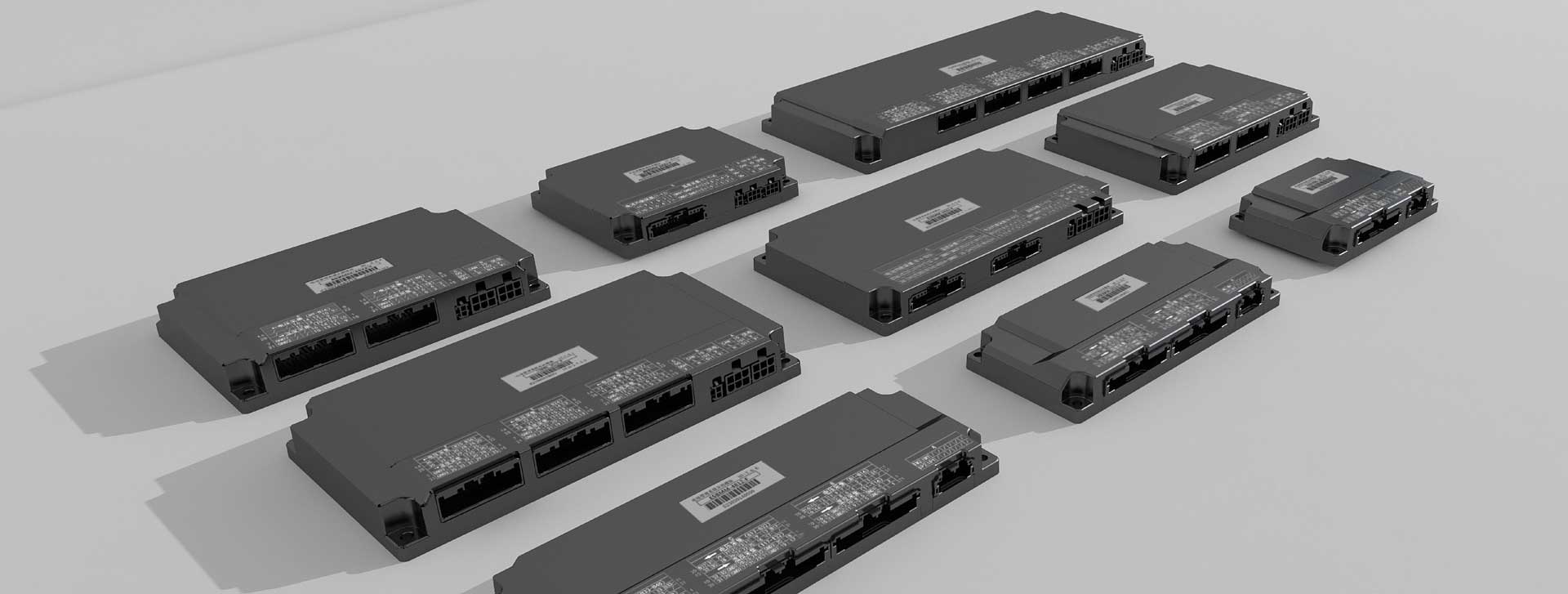
The battery management system (BMS) of the energy storage power station adopts a three-tier architecture, consisting of the BMU (slave control unit), BCU (master control unit), and BAU (master control unit), enabling hierarchical management and control of battery modules, clusters, and stacks.
Battery Monitoring Unit, shofrt for BMU

Picture source kgooer.com
Monitors single-cell battery voltage, temperature, and other parameters
Performs passive balancing (balancing charge through resistor discharge)
Uploads data to the BCU via protocols such as CAN/RS485
Battery Cluster Unit, short for BCU

Picture source wen.bmser.com
Aggregates BMU data and monitors battery cluster voltage and current
Estimates state of charge (SOC) and state of health (SOH)
Controls charge and discharge strategies with a response time of ≤100ms
Battery Array Unit, short for BAU

Picture source wen.bmser.com
Aggregates BCU data and formulates comprehensive strategies
Implements overall circuit breaker control and fault isolation
Communicates with the EMS (energy management system) and PCS (power conversion system)