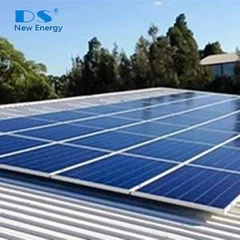
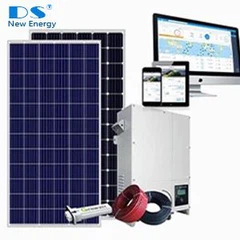
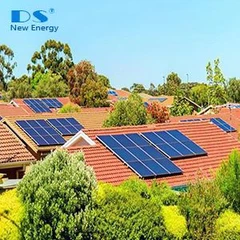
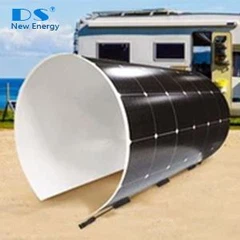

A micro-inverter converts power at the solar panel from DC electricity to 240V AC electricity and is attached to each panel in a solar system. Micro-inverters best suit shaded roofs as shade affecting one panel will not affect any other unshaded panels. They are also useful on roofs that are too small to enable a string of panels to be installed. Micro-inverters are a little more expensive to install as instead of one central inverter, each panel has its own inverter. With more inverters there are potentially more chances of a failure.. Micro inverters have now been used for a number of years and offer s solid solution as an alternative to string inverters.

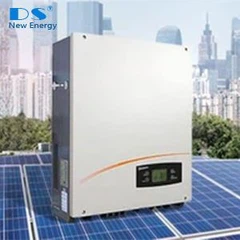
A string inverter is connected to a series or “string” of solar panels and converts the power from Direct Current (DC) in to Alternate Current (AC) electricity, for the solar system as a whole. A string inverter will usually be located a short distance away from the array in a sheltered location between the solar array and the switchboard. This is the most common type of inverter used in residential and small / medium commercial systems in Australia.

A central inverter is a high capacity inverter designed for use with large commercial or utility (power station) sized solar systems. It is like large string inverter designed to handle more power and offer efficiencies / economies of scale. Central inverters are not used for residential solar systems.
Tips on choosing great inverters
An inverter is the second most crucial piece of equipment in your solar system, being responsible for the quality and safety of the power coming out of your solar array and importantly, optimising the generation under different conditions to maximise your energy harvest.
Inverters perform four basic functions:
1. Power maximisation – Solar panels all have a “Maximum Power Point”, a performance curve where they produce the most power under a given set of circumstances. Inverters are equipped with Maximum Power Point Trackers (MPPT) which continually hunt for this sweet spot and maximise the energy available from your solar array.
2. Conversion – Solar panels produce Direct Current (DC) electricity with most solar arrays producing around 200-600 Volts DC. We use power as 240V AC, so the second function of an inverter is to convert the DC electricity to AC electricity.
3. Regulation – As sunshine, solar output and grid conditions vary an inverter will regulate and synchronise all these variables so the power quality is within specification and power harvest is maximised. Regulation also includes monitoring and disconnecting the inverter and solar system from the grid if required for safety or other reasons.
4. Monitoring – Inverters also measure and display information for you, so that you can check that your system is performing as expected, or diagnose faults if they occur. Many options exist for accessing data including display screens on the inverter, web and smart phone based applications. These will be either ethernet or wirelessly connected to your router. Consider the wireless performance capability of your home here.
Inverters are complex electronic devices and like any such device, they can be built to a price or built for robustness and performance. Unless you happen to be an electronics engineer, it is very hard to know how the quality of the components used in a given inverter will translate into life expectancy. However, there are a few things the uninitiated can go by.
Firstly, the rules of experience, commitment, transparency and size play a role. Secondly, we can tell a bit about the product by the quality of its construction; are the materials used high quality? Is it built to keep out insects and weather? Has cooling been carefully considered with zero moving parts? Does it have a good set of features and not too many gimmicks?
Although inverters have reduced in price significantly in recent years, as a general rule, you get what you pay for. Performance is typically measured through features, conversion efficiency and the inverter's ability to deliver power under a wide range of conditions.
Where to install inverters – noise and heat
It is worth noting that, being electronic devices, inverters can and do produce audible noise from time to time. As a general rule transformer based inverters are noisier although cheaper and all devices may resonate slightly through their case.
It is worth carefully considering where you mount your inverter to avoid annoying transmission of either noise of vibration to areas where you may be disturbed and to consider the material that it is being affixed to which would make the issue better or worse. Lightweight stud walls for example, can more easily vibrate than a solid brick wall.
Virtually all inverters produce heat as a normal part of their operation. The lower the operating
temperature, the higher the efficiency and as a general rule, the less stressed the components are. It therefore makes sense to install the inverter in the coolest, best ventilated position possible to maximise energy output and performance.