
Product Overview

1:Inverter Indicators
2: LcD display
3:Function Buttons
4: Battery input connectors
5:RS 485/Meter Port
6:BMS 485/CAN Port
7: DRMs Port
8: Parallel port
9: Function Port
10: Generator input
11: Load
12: Grid
13:Power on/off button
14: Dc Switch
15: PV input with two MPPT
16: Battery
17: Temperature sensor
18:WiFi Interface

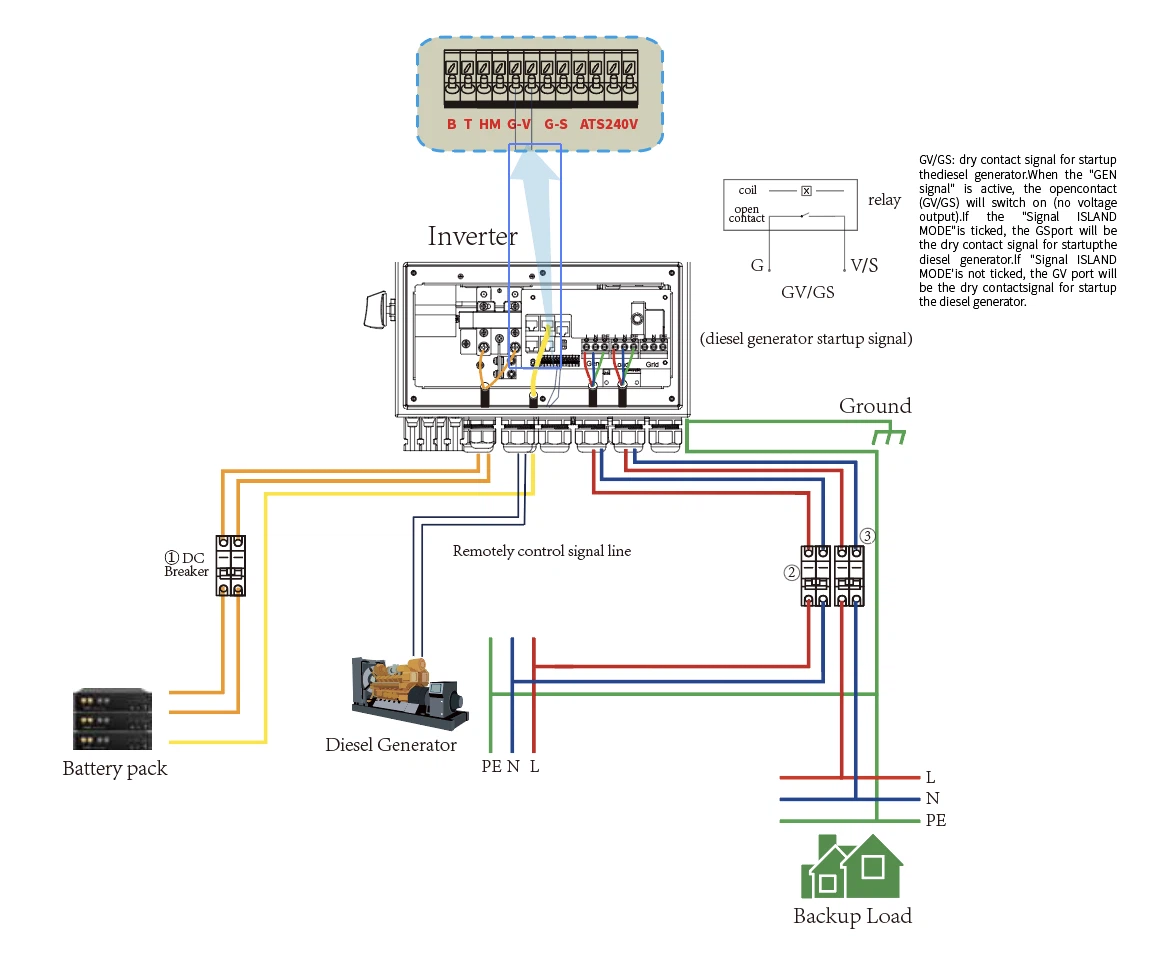
Why Choose a Diesel Generator for Solar Backup?
There are several reasons why a diesel generator for solar panel backup makes sense:
Reliability – Diesel generators can operate continuously depending on the availability of fuel. They form a dedicated source of power that you can always count on whenever your solar panels are not producing power.
Power output – The turbine in a generator provides a high-power output, so the whole home solar system can be backed up.
Fuel efficiency – Diesel fuel provides more energy per unit of volume than gasoline or propane, which means the diesel generator can run for up to half-time between refueling.
Durability – these engines are durable and the work life is long. When serviced properly, a diesel generator can render backup power even for decades.
Weather-resistant – Diesel engines work well in a cold climate. This conditions them to play the crucial role of being a backup power source during extreme weather.
Using SPT systems, a diesel generator is good to alternate because it will have some downtime and loan power to your home.
How to Connect a Generator to Solar Panels
Connecting a diesel generator to your solar panel system involves both electrical and fuel connections. Proper integration is key for safe and effective backup. Here are the steps:
Electrical Connection
- Install a manual transfer switch to safely transition between grid, solar panel, and generator power.
- Use a qualified electrician to wire the transfer switch and generator for proper voltage, amperage, and grounding.
- Connect the generator and solar panel system through the transfer switch to a central distribution panel.
- Set up the generator near the transfer switch to minimize voltage drop from cable length.
- Establish a grounding rod for the generator to prevent electric shock risk.
Fuel Connection
- Install a diesel fuel tank and supply lines rated for generator runtime needs.
- Add fuel filters, transfer pumps, and other equipment if the tank is located away from the generator.
- Use proper codes and containment for diesel tanks to minimize environmental hazards.
- Consider an automatic fuel transfer switch to replenish the day tank from bulk storage when needed.
- With the proper electrical and fuel systems in place, your generator will be ready to automatically back up your solar panels when required.
Operating Your Generator with Solar Panels
Here are some tips for effectively operating your diesel generator with a solar panel system:
1. Set up your generator to start automatically when solar output drops below a certain threshold.
2. Use an automatic transfer switch to seamlessly toggle connected loads from solar to generator power.
3. Monitor generator runtime hours and schedule maintenance accordingly per the manufacturer's specifications.
4. Exercise the generator regularly by running it under load to ensure it will perform when needed.
5. Keep spare fuel and parts on hand for generator maintenance and long runtimes.
6. Shut down non-critical loads when running the generator to maximize fuel efficiency.
7. Turn off the generator when solar production returns and the batteries are sufficiently recharged.
Proper operation will maximize the longevity of your diesel generator for solar panel and minimize fuel consumption.