Comparison of Photovoltaic Flexible Modules and Conventional Modules
Introduction
In the global pursuit of sustainable energy solutions, photovoltaic (PV) technology has emerged as a leading contender. PV modules, the fundamental components of solar power systems, come in various types, with flexible modules and conventional modules being two prominent categories. These two types of modules have distinct characteristics in terms of their construction, performance, durability, cost, and application scenarios. A comprehensive understanding of their differences is crucial for making informed decisions in PV system design, installation, and utilization, whether for large - scale power generation projects, residential applications, or specialized uses in mobile and unique environments.
Global solar capacity reached 1.6 TW in 2023, with rigid crystalline silicon (c-Si) modules dominating 95% of the market. However, flexible PV modules using thin-film (CIGS, CdTe) and emerging perovskite technologies are gaining traction in niche applications.

Technology Comparison
Material Composition
|
Parameter |
Conventional c-Si Modules |
Flexible Thin-Film Modules |
|
Substrate |
3.2mm tempered glass |
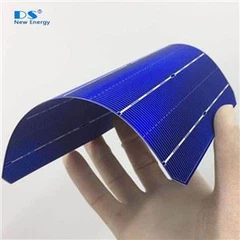
Polyimide/PET (50-200μm) |
|
Active Layer |
156mm monocrystalline Si |
CIGS (1.5-2μm)/Perovskite |
|
Encapsulation |
EVA + glass backsheet |
ETFE or PDMS nanocomposites |

Key information: Flexible modules reduce material usage by 78% but exhibit higher thermal coefficient (-0.3%/°C vs. c-Si's -0.4%/°C).
Manufacturing Processes
Conventional: High-temperature diffusion (900°C), tabbing/stringing, glass lamination.
Flexible: Roll-to-roll (R2R) deposition at 150-300°C, monolithic integration.
Energy payback time: 1.8 years for c-Si vs. 1.1 years for CIGS.

Performance Metrics
Electrical Characteristics
Efficiency:
c-Si: 22.8% (laboratory), 19-21% (commercial).
Flexible CIGS: 17.5% (NREL certified), 23% for perovskite-c-Si tandem prototypes.
Temperature Coefficient: Flexible modules show 15% lower power loss at 65°C ambient.
Mechanical Reliability
Flexural endurance:
c-Si fails at >0.5% strain (3mm deflection over 1m length).
CIGS sustains 2000 cycles at 2% strain.
Hail impact: Glass-based modules withstand 25mm hail at 23m/s; flexible versions require protective coatings.

Economic Analysis
Cost Breakdown (USD/Watt)
|
Component |
c-Si |
Flexible CIGS |
|
Materials |
0.18 |
0.12 |
|
Manufacturing |
0.22 |
0.15 |
|
Installation |
0.30 |
0.10 |
|
Total |
0.70 |
0.37 |
Note: Flexible modules reduce balance-of-system costs by 40% in vehicle-integrated PV applications.
Environmental Impact
Material and Energy
Conventional crystalline silicon modules involve energy - intensive silicon purification (up to 1500°C) and production of glass/aluminum frames, leading to high carbon emissions (300 - 800g CO₂e/watt). Their energy pay - back time (EPBT) is 1 - 3 years.
Flexible thin - film modules (a - Si, CIGS, CdTe) use less energy in production. Amorphous silicon deposition occurs at lower temperatures, and roll - to - roll manufacturing reduces energy loss, with EPBT of 0.5 - 2 years. Emissions are lower (100 - 300g CO₂e/watt), but CdTe modules carry cadmium toxicity risks.
Installation Phase
Conventional modules need flat surfaces and support structures, requiring more land (with vegetation clearing) and heavier transportation, increasing emissions. Rooftop installations may demand structural reinforcement.
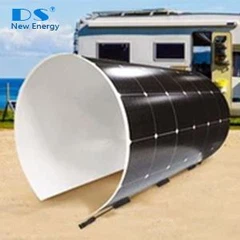
Flexible modules, lightweight and bendable, fit curved/irregular surfaces, reducing land use. They often install without bulky supports, cutting transportation energy and on - site emissions.
Operational Phase
Both generate clean electricity, displacing fossil fuels. Conventional modules are sensitive to heat and shading, potentially needing more units to meet targets.
Flexible modules perform better in low light and high temperatures, with superior shading tolerance, reducing the need for extra modules.
Application-Specific Advantages
Flexible Modules
Curved building surfaces (0.1-0.3kg/m² vs. 12kg/m² for c-Si)
Vehicle integration (Tesla Cybertruck case study: 15km/day added range)
Integrated Photovoltaic (BIPV): Flexible modules can be perfectly integrated with buildings as part of building facades, roofs, or windows, achieving the dual goals of photovoltaic power generation and building aesthetics.

Conventional Modules
Large-scale public utility sites (30-year reliability verification)
High irradiation area (better ultraviolet stability)

Conclusion
While conventional PV modules maintain superiority in efficiency and bankability, flexible technologies enable new application paradigms. The choice depends on project-specific requirements for weight, form factor, and durability.