
Source: powerengineeringint.com

Renewables covered almost 52% of gross German electricity consumption in 2023, according to preliminary calculations by the Center for Solar Energy and Hydrogen Research Baden-Württemberg (ZSW) and the Federal Association of the Energy and Water Industry (BDEW).
This means that the share has increased by five percentage points compared to the same period last year and is now above the 50% mark for a full year for the first time.
According to the organisations in a joint release, there was a particularly high proportion of renewable electricity in the months of July (59%), May (57%) and October and November (55% each).
In June, electricity generation from photovoltaics reached a new record of 9.8 billion kWh of electricity. Electricity generation from onshore wind energy reached a new record of 113.5 billion kWh for the year as a whole.
Since the renewable energy quota is measured as a proportion of electricity consumption, lower consumption increases the quota and vice versa. Therefore, the current lower electricity consumption has a positive effect on the renewable energy quota.
However, states the organisation, even in absolute terms, renewable energy production was higher than ever before at 267.0 billion kWh. This corresponds to an increase of six per cent compared to the previous year.
"The numbers show that we are on the right track. Many people once believed that renewables only accounted for a single-digit share of electricity consumption, but today we use more electricity from renewable sources than from conventional sources and have our sights firmly set on 100% renewables," said Kerstin Andreae, chairwoman of the BDEW Executive Board.
"The path to a completely climate-neutral power supply was and is not a sure-fire success. We can only achieve the second 50% if politicians continue to consistently remove all hurdles to the expansion of renewables. Companies in the energy industry would like to invest in the energy transition, but despite improvements in legislation, they are still too often slowed down by lengthy approval processes, excessive bureaucracy and a lack of space."
German consumption: production figures
According to preliminary calculations, a total of around 508.1 billion kWh of electricity was generated in 2023 – almost 11% less than in 2022. Of this, 267.0 billion kWh came from renewable energies, compared to 251.8 billion kWh in 2022.
Onshore wind turbines accounted for the largest share of renewable electricity generation at 113.5 billion kWh, compared to 100.1 billion kWh in 2022.
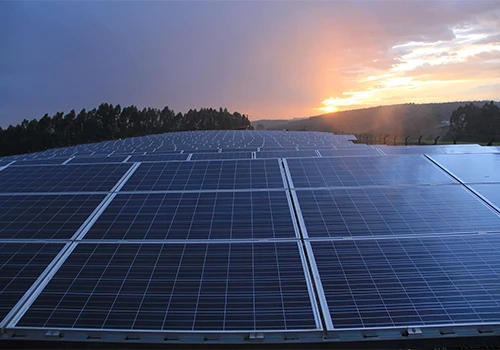
Photovoltaic systems delivered 62.0 billion kWh (2022: 59.3 billion kWh), closely followed by biomass (including the biogenic portion of municipal waste) with 49.7 billion kWh (2022: 49.7 billion kWh).
23.0 billion kWh of electricity came from offshore wind turbines (2022: 25.2 billion kWh).
Hydropower plants delivered 18.7 billion kWh (2022: 17.4 billion kWh).
"The move away from the fossil fuels coal, oil and natural gas decided at the World Climate Conference in Dubai last Wednesday is not only a very important signal for climate protection," added Prof. Dr. Frithjof Staiß, managing director of the ZSW.
"This shift requires an expansion of renewable energies in completely new dimensions. In order to cover the future demand for hydrocarbons, green hydrogen is first needed, which is produced using electrolysis with renewable electricity.
"Although unavoidable process emissions can be used as a carbon source, these will be far from sufficient to cover the climate-neutral need for synthetic hydrocarbons as raw materials, especially in the chemical industry as well as in aviation and international shipping.
"We therefore have to start scaling up direct air capture systems for the direct extraction of CO2 from the air as soon as possible. These also require renewable electricity. The expansion dynamic of renewable energies must therefore increase significantly, not only in Germany but worldwide, in order to ensure that the 1.5 degree target is achieved."