


Green hydrogen, produced via photovoltaic (PV) - powered water electrolysis, has emerged as a pivotal element in the global transition towards a carbon - neutral energy system, offering a sustainable solution for energy storage, grid balancing, and decarbonizing hard - to - abate sectors. This paper provides a comprehensive review of PV - to - hydrogen (PV - H₂) technology, encompassing fundamental principles, technical pathways, performance bottlenecks, and practical applications.
The world is facing unprecedented challenges of climate change and energy security, driven by the over - reliance on fossil fuels and the associated greenhouse gas (GHG) emissions. Green hydrogen, generated by using renewable energy to split water, has gained significant attention as a versatile energy carrier and feedstock that can facilitate deep decarbonization across various sectors. Among the renewable energy sources, solar photovoltaic (PV) power is the most abundant and widely deployable, making PV - powered electrolysis a promising pathway for green hydrogen production.
1.Technical Fundamentals of PV - Driven Hydrogen Production
1.1Photovoltaic Power Generation
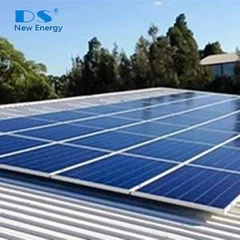
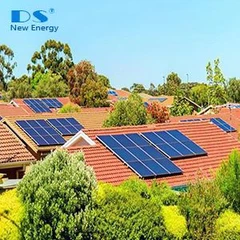
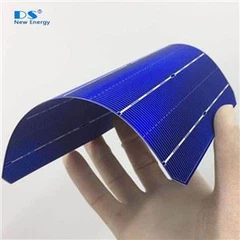
PV cells convert sunlight into electricity through the photovoltaic effect, where photons excite electron - hole pairs in a semiconductor material. Silicon - based PV modules, including monocrystalline, polycrystalline, and thin - film technologies, dominate the market due to their high efficiency and long - term durability.

Water Electrolysis Technologies
Water electrolysis is the process of splitting water into hydrogen and oxygen using electrical energy, described by the following reaction: 2H₂O(l) → 2H₂(g)+O₂(g), with a thermodynamic potential of 1.23 V at 25°C. Four main electrolyzer technologies are currently used for PV-H₂ applications:
|
Electrolyzer Type |
Operating Temperature |
Efficiency |
CAPEX |
Key Advantages |
Key Limitations |
|
Alkaline Water Electrolysis (AWE) |
Low (20 - 80°C) |
65% - 75% |
Low |
Mature, low - cost materials, high scalability |
Low current density, slow OER kinetics, electrolyte management |
|
Proton Exchange Membrane Electrolysis (PEMWE) |
Low (20 - 80°C) |
70% - 80% |
High |
High current density, fast dynamic response, compact design |
Expensive membranes and catalysts (platinum group metals), durability issues |
|
Anion Exchange Membrane Water Electrolysis (AEMWE) |
Low (20–80°C) |
68%–78% |
Medium |
No noble metal catalysts required, high current density, flexible electrolyte compatibility |
Membrane conductivity degradation, limited long-term durability, material synthesis challenges |
|
Solid Oxide Water Electrolysis (SOWE) |
High (700 - 850°C) |
80% - 90% |
High |
High efficiency, uses steam instead of liquid water |
High - temperature operation, material degradation, slow startup |

PV-Electrolyzer Coupling Configurations
The integration of PV systems with electrolyzers can be categorized into three configurations:
Direct Coupling: PV modules are directly connected to electrolyzers without intermediate power electronics. This configuration is simple and cost-effective but suffers from significant energy losses due to mismatches between the PV maximum power point (MPP) and the electrolyzer's operating voltage (1.6–2.0 V).
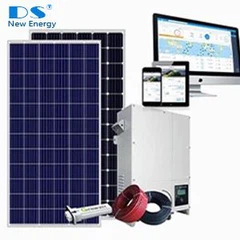
MPPT-Controlled Coupling: Maximum Power Point Tracking (MPPT) controllers are used to optimize PV output and match the electrolyzer's voltage requirements. This configuration reduces coupling losses but adds complexity and cost.
Battery-Assisted Coupling: Energy storage systems (e.g., lithium-ion batteries) are integrated to store excess PV energy and provide backup power during low-irradiance periods, ensuring stable electrolyzer operation. This configuration enhances system reliability but increases CAPEX and requires additional maintenance.
2.Performance Limitations and Optimization Strategies
2.1Key Efficiency Losses
PV-H₂systems face three main types of energy losses:
PV Conversion Losses: Inefficiencies in PV cells, including spectral mismatch, temperature effects, and shading losses, which reduce the electricity output.
Electrolyzer Losses: Overpotentials associated with the hydrogen evolution reaction (HER) and oxygen evolution reaction (OER), as well as ohmic losses in electrodes, electrolytes, and membranes.
Coupling Losses: Mismatches between the PV MPP and the electrolyzer's operating voltage, leading to underutilization of PV power.
Material and Device Optimization
To address the issues mentioned above, the materials and devices can be improved in the following three ways.
PV Module Innovation: Developing high-efficiency PV cells (e.g., perovskite-silicon tandems) and bifacial modules to increase energy capture. Using anti-reflective coatings and thermal management systems to reduce temperature-related losses.
Electrocatalyst Development: Designing low-cost, high-activity catalysts for HER and OER, such as transition metal oxides (Fe₂O₃-NiOxHy) and chalcogenides, to reduce overpotentials and replace expensive platinum group metals.
Electrolyzer Architecture: Optimizing cell design, including electrode structure, membrane materials, and flow field configuration, to enhance mass transport and reduce ohmic losses.
System-Level Integration
In addition to the three targeted methods mentioned above, it can also be done through system integration.
Voltage-Matching Technologies: Using DC-DC converters and MPPT controllers to align the PV output voltage with the electrolyzer's operating range.
Energy Storage Integration: Combining batteries, supercapacitors, or hydrogen storage (via compression or liquefaction) to mitigate the impact of solar intermittency and ensure continuous electrolyzer operation.
Hybrid System Design: Integrating PV with other renewable energy sources (e.g., wind) or concentrating solar power (CSP) to stabilize energy input and improve overall system efficiency.
3.Applications of PV-Derived Green Hydrogen
3.1Industrial and agricultural raw materials
Green hydrogen is used as a feedstock in industrial processes, such as ammonia production, methanol synthesis, and steelmaking, replacing fossil-based hydrogen and reducing carbon emissions. For example, green ammonia production via PV-H₂ can decarbonize the agricultural sector, which relies heavily on nitrogen fertilizers.

Transportation
Hydrogen fuel cell vehicles (FCVs) offer long-range and fast-refueling capabilities compared to battery-electric vehicles (BEVs). PV-H₂ can power FCVs for passenger cars, trucks, buses, and heavy-duty vehicles, providing a zero-emission alternative to gasoline and diesel.

Grid Energy Storage
Green hydrogen can be stored for long periods and converted back to electricity using fuel cells during peak demand, enabling grid balancing and supporting the integration of intermittent renewable energy sources.
Power-to-X (P2X) Processes
PV-derived hydrogen can be used in P2X applications, such as power-to-liquid (P2L) for synthetic fuels, power-to-heat (P2H) for industrial and residential heating, and power-to-chemicals (P2C) for producing high-value chemical products.

4.Practical Application of Photovoltaic Hydrogen Production Technology
10 Nm³/h Solar Hydrogen Electrolyzer System
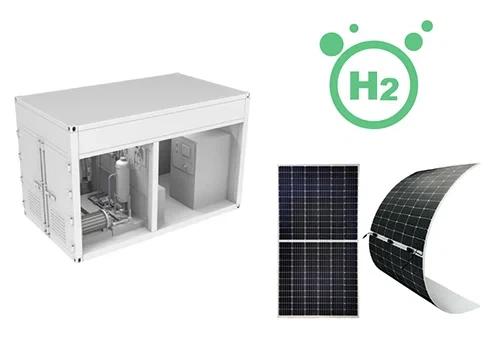
Equipment list
|
No. |
Item |
Description |
Quantity |
Unit |
|
1 |
Hydrogen Generation Systems |
KAS-10, 10 Nm³/h Alkaline Hydrogen Generator, >99.9999% Purity, ≤30 min Cold Start, ≤10 s Dynamic Response, -71°C Dew Point, 0.7 MPa Output Pressure, 380V 50Hz AC, 50 kW Power, |
1 |
pcs |
|
2 |
Solar panel |
Mono 580 W |
172 |
pcs |
|
3 |
Mounting structure |
Mounting structure for solar panel installed on the roof |
1 |
set |
|
4 |
Hybrid inverter |
100KW |
1 |
pcs |
|
5 |
Battery |
51.2V/200AH/10KWh |
2 |
pcs |
|
6 |
Combiner box |
6in1out |
2 |
pcs |
|
7 |
Cable |
6mm2 cable, red and black |
1200 |
mtr |
|
8 |
PV connector |
MC4 compatible |
24 |
pair |
100m³ PV Hydrogen & Energy Storage System

Equipment list
|
No. |
Item |
Description |
Quantity |
Unit |
|
1 |
Hydrogen Generation Systems |
KAM-100 ≥99.98% Hydrogen Purity, ≤30 min Cold Start Time, |
1 |
pcs |
|
2 |
Solar panel |
Mono 580 W |
1660 |
pcs |
|
3 |
Mounting structure |
Mounting structure for solar panel installed on the roof |
1 |
set |
|
4 |
Hybrid inverter |
500KW |
2 |
pcs |
|
5 |
Battery |
716.8V/280AH/200KWh |
10 |
pcs |
|
6 |
Cable |
6mm2 cable, red and black |
7200 |
mtr |
|
7 |
PV connector |
MC4 compatible |
240 |
pair |
Solar H2 Plant – 1000m³ PV Hydrogen & Energy Storage System

Equipment list
|
No. |
Item |
Description |
Quantity |
Unit |
|
1 |
Hydrogen Generation Systems |
KAR-1000 |
1 |
pcs |
|
2 |
Solar panel |
Mono 580 W |
25584 |
pcs |
|
3 |
Mounting structure |
Mounting structure for solar panel installed on the roof |
1 |
set |
|
4 |
on grid inverter |
350KW |
82 |
pcs |
|
|
PCS/Battery(optional) |
|||
|
5 |
set-up transformer |
800V-10kv/5000kva |
6 |
pcs |
|
6 |
Cable |
6mm2 cable, red and black |
118100 |
mtr |
|
7 |
PV connector |
MC4 compatible |
3936 |
pair |
Project product website: https://www.solarmoo.com/solar-hydrogen/
5.Challenges and Future Outlook
Current Challenges
Cost Competitiveness: The high CAPEX of PV-H₂ systems, particularly for electrolyzers and PV modules, makes green hydrogen more expensive than gray hydrogen (produced from natural gas).
Durability and Reliability: Electrolyzers face challenges related to long-term operation, including catalyst degradation, membrane fouling, and corrosion, which affect system lifespan.
Scalability: Large-scale PV-H₂ projects require significant land, water, and infrastructure, which may be limited in some regions.
Future Research Directions
Advanced Materials: Developing next-generation PV cells (e.g., perovskite-silicon tandems) and electrolyzer components (e.g., cross-linked AEM membranes, high-stability non-noble catalysts) to improve efficiency and reduce costs.
System Optimization: Implementing artificial intelligence (AI) and machine learning (ML) for real-time energy management and predictive maintenance, enhancing system reliability and performance.
Policy and Market Support: Establishing favorable policies, such as carbon pricing and green hydrogen subsidies, to drive investment and reduce the cost gap with fossil-based hydrogen.
PV-driven hydrogen production holds great promise for a sustainable energy future, offering a clean and renewable pathway for hydrogen generation. Despite current challenges, significant progress has been made in improving system efficiency, reducing costs, and expanding applications. By integrating material innovation, system engineering, and policy support, PV-H₂ technology can play a crucial role in achieving global carbon neutrality goals.