

Hydropower remains the world's largest source of renewable electricity, generating over 4,500 terawatt-hours annually and supplying about 14% of global power needs. As of late 2025, ongoing developments in key equipment like turbines, generators, and pumped storage systems are improving efficiency, reducing environmental impacts, and helping integrate more wind and solar into the grid. These hydropower technology trends focus on flexibility, sustainability, and modernization of existing plants, making hydropower a vital part of the clean energy transition.
With global hydropower capacity additions reaching 24.6 GW in 2024-including a surge in pumped storage-this sector is growing to meet rising electricity demand while supporting grid stability. Innovations in hydropower turbines, generators, and materials are driving these changes, allowing plants to operate more reliably in varying conditions.

Modern Turbines: Handling Variable Conditions Better
Traditional fixed-speed turbines work well at full load but lose efficiency when water flow changes. New variable-speed turbines adjust their rotation speed to match available water, improving performance at partial loads and allowing quicker responses to grid demands.
These systems often use advanced controls like double-fed induction generators. Companies such as Voith Hydro and GE Vernova are leading with designs that operate efficiently over wider head and flow ranges. This flexibility is key for grids with high shares of intermittent renewables.
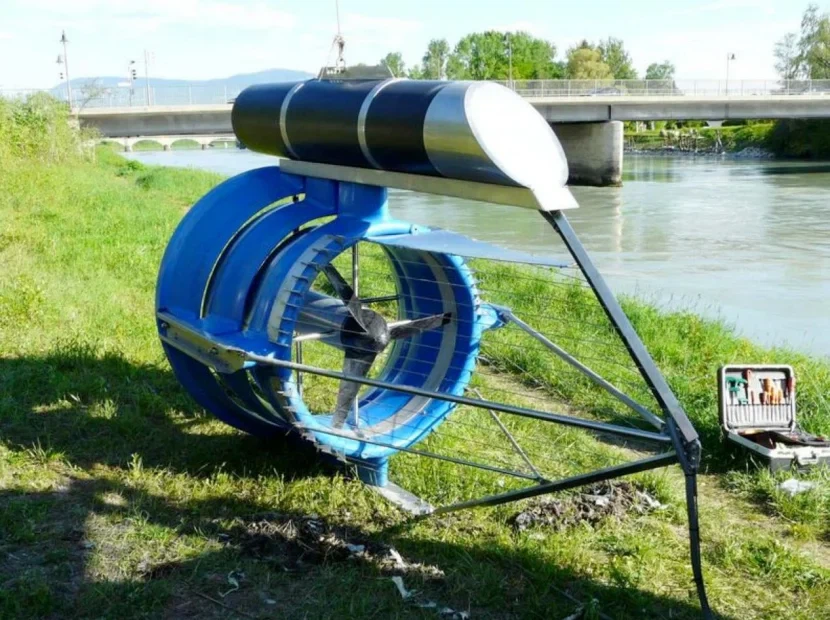
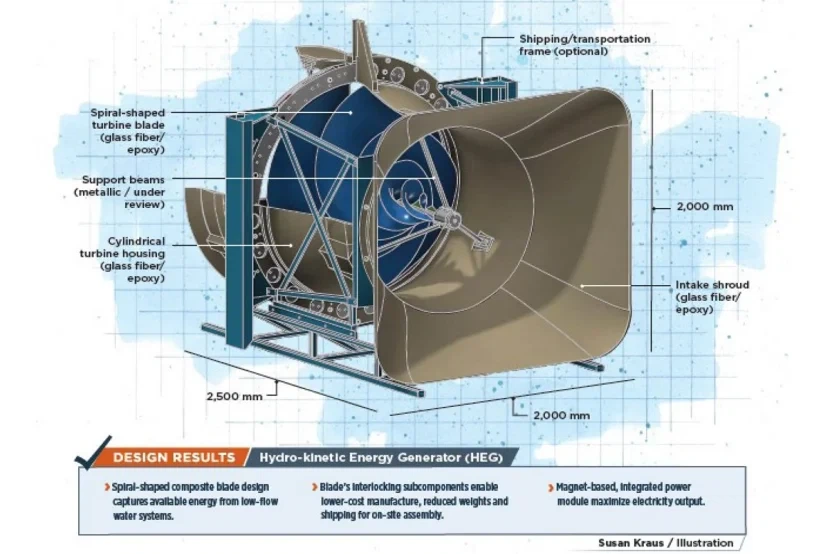
Low-head and modular turbines are opening up new sites. Hydrokinetic turbines generate power from river currents without large dams, while pumps-as-turbines (PATs) offer low-cost options for small projects.
Fish-Friendly Turbine Designs: Protecting Aquatic Life
One major challenge for hydropower has been fish passing through turbines. New designs address this directly.
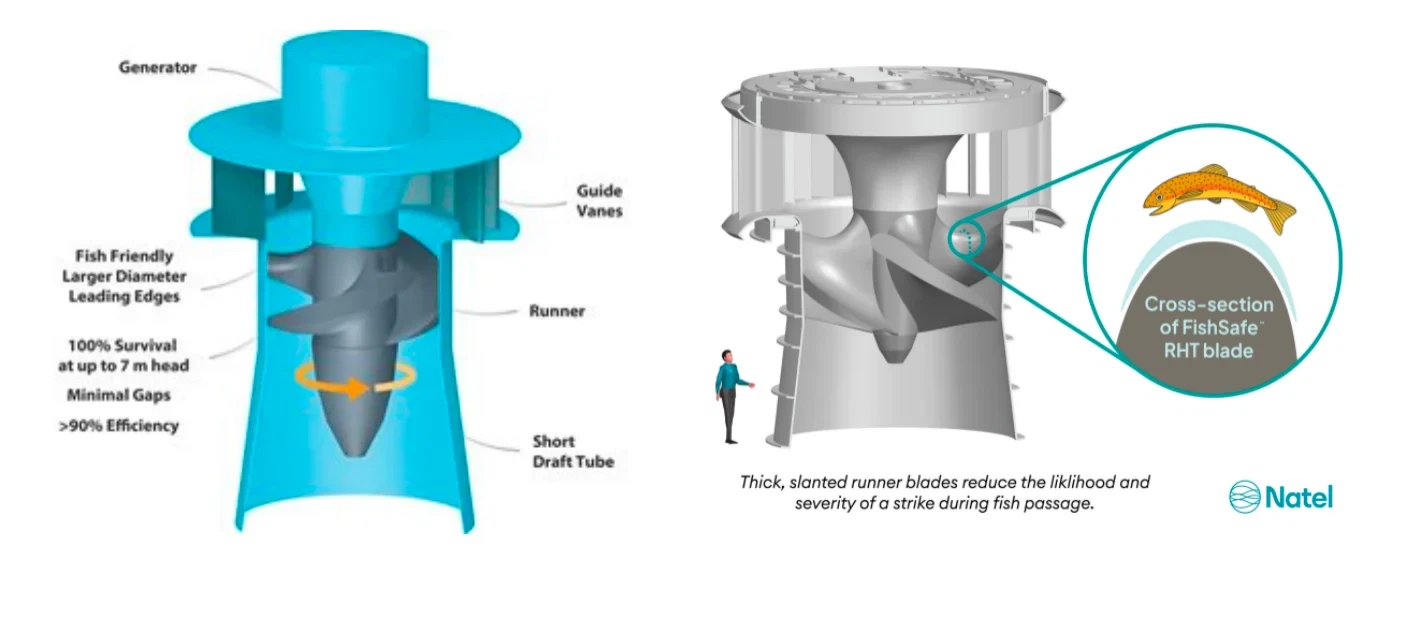
Natel Energy's Restoration Hydro Turbine (RHT) uses thick, slanted blades with rounded edges. Independent tests show 98-100% survival rates for fish like American eels, salmon, and sturgeon-much higher than the 78% average for conventional turbines. These turbines also fit into existing dams, often eliminating the need for costly fish screens.
Other innovations include minimum-gap runners and hydrokinetic designs that reduce risks to migrating species. These fish-safe hydropower turbines allow projects to meet stricter environmental regulations while generating power

Generator Improvements for Grid Support
Generators are evolving to provide more than just power output.
Permanent magnet generators (PMGs) are smaller and perform well at low speeds, ideal for run-of-river or small plants. Variable-speed generators, paired with technologies like doubly-fed induction systems, offer better control and ancillary services such as frequency regulation.
In 2025, projects like India's Tehri pumped storage plant commissioned the country's first variable-speed units, enhancing grid flexibility.

Pumped Storage Hydropower: The Growing "Water Battery"
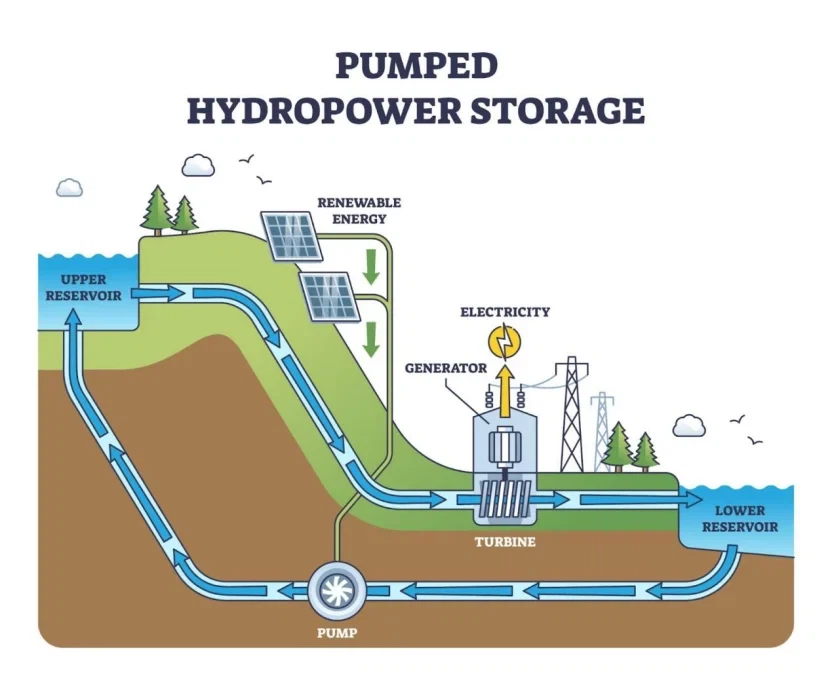
Pumped storage hydropower (PSH) stores energy by pumping water uphill during low demand and releasing it to generate power when needed. It accounts for most global grid-scale storage.
In 2024, 8.4 GW of new PSH capacity came online, bringing total capacity to 189 GW. The global pipeline now exceeds 600 GW, with strong growth in China, Europe, and Africa.
Variable-speed PSH units improve efficiency in both pumping and generating modes. Hybrid systems combining PSH with batteries are also emerging for faster response.

Advanced Materials and Digital Tools
New materials are making equipment lighter and longer-lasting. Composites can reduce turbine blade weight by 50-80% while resisting corrosion and wear. Superhydrophobic coatings cut friction losses and prevent buildup.
Digital twins, sensors, and AI enable real-time monitoring and predictive maintenance, boosting output and reducing downtime. These hydropower advancements in materials and digitalization extend plant life and lower costs.
As we move toward net-zero goals, these cutting-edge hydropower technologies ensure the sector remains reliable, efficient, and environmentally responsible. From variable-speed systems to fish-friendly designs, 2025 marks continued progress in making hydropower a cornerstone of sustainable energy worldwide.