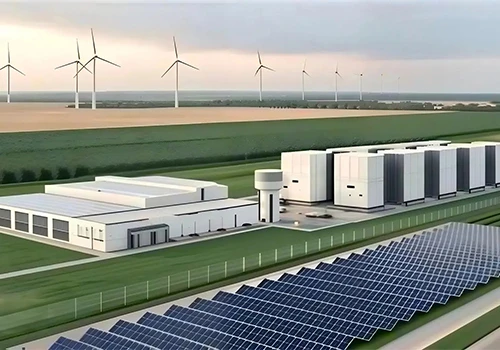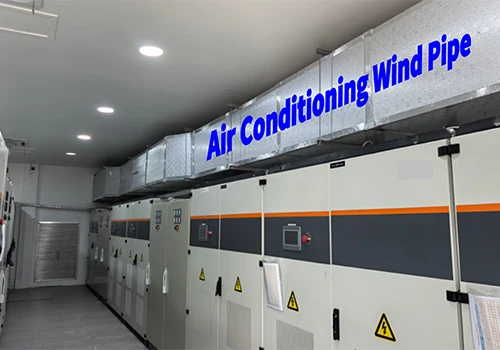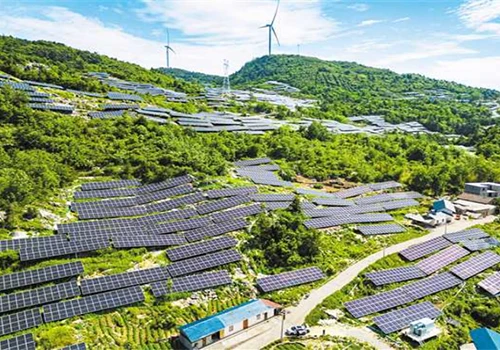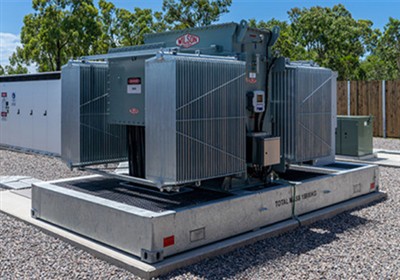
This paper focuses on the implementation methods of Energy Storage Virtual Synchronous Generator (VSG) and its significant support role for the power grid. With the increasing penetration of distributed energy sources such as photovoltaic power generation, the stability of the power grid faces challenges due to their randomness and intermittency.
VSG technology enables distributed power sources to exhibit characteristics similar to traditional synchronous generators when connected to the grid by simulating the mechanical and external characteristics of synchronous generators, thereby enhancing the stability and reliability of the power grid. This paper first introduces the implementation methods of Energy Storage VSG from the aspects of control strategies and system architectures. Then, it elaborates on the support role of Energy Storage VSG for the power grid in terms of frequency support, voltage support, and improvement of power grid stability. Finally, the application scenarios of VSG technology were expounded1.
1.Control strategy for Virtual Synchronous Generator
The core idea of VSG control is to simulate the rotor motion equation and electromagnetic transient equation of a synchronous generator by controlling the output voltage and current of the inverter. Its basic control strategy usually includes the following parts:
1.Power Angle equation simulation: Simulate the rotor motion equation of a synchronous generator to establish the relationship between the output active power and the virtual angular frequency.
2.Voltage equation simulation: Simulate the excitation equation of a synchronous generator to establish the relationship between the output reactive power and the virtual internal potential.
3.Power calculation and filtering: To accurately calculate the active and reactive power output by the inverter, it is necessary to collect the output voltage and current and perform corresponding filtering processing to eliminate the influence of high-frequency noise and grid disturbances.
4.Phase Locked Loop (PLL) substitution: In VSG control, the traditional phase locked loop is usually not required. The virtual angular frequency is directly calculated by the power Angle equation, achieving synchronization with the power grid. This avoids the possible lock loss problem of PLL under weak power grid conditions2.
In the VSG-based photovoltaic hybrid energy storage system, the VSG control of the energy storage converter usually receives power instructions from EMS. EMS calculates the reference values of active and reactive power that the energy storage system needs to provide based on information such as photovoltaic output, load demand, grid status, and energy storage SOC. The VSG controller of the energy storage converter, based on these reference values and by simulating the characteristics of synchronous generators, controls the output of the inverter to achieve precise power regulation and inertial support for the power grid3.
In addition, in view of the characteristics of photovoltaic grid connection, some special control strategies also need to be considered:
Coordinated control strategy: How to coordinate the control between photovoltaic inverters and energy storage converters to achieve the optimal operation of the entire system. For instance, when the grid frequency drops, the energy storage system provides inertial support by rapidly releasing active power through VSG control, while the photovoltaic system can moderately lower the MPPT point to participate in frequency regulation.
Energy storage SOC management: The SOC of energy storage batteries is a key factor affecting the long-term stable operation of the system. SOC management strategies need to be integrated into VSG control to prevent overcharging or overdischarging of the battery.
Weak grid adaptability: Under weak grid conditions, the grid impedance is relatively high, and the voltage and frequency are more prone to fluctuation. VSG control needs to be optimized for weak grid characteristics to enhance the stability margin of the system4.
2.System Architecture of Energy Storage VSG
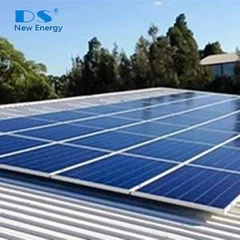
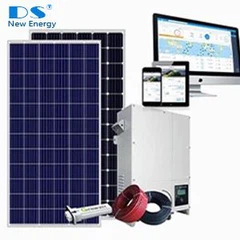
The energy storage VSG grid - connection system is mainly composed of photovoltaic arrays, energy storage systems, inverters, and VSG control units.
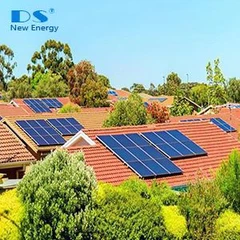
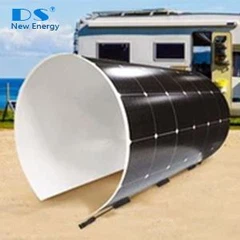
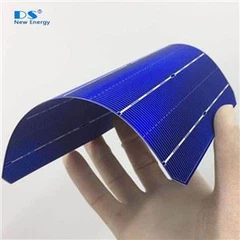
Photovoltaic Array: It is responsible for converting solar energy into DC electrical energy, which is the energy source of the system. The photovoltaic inverter can adopt the Maximum Power Point Tracking (MPPT) control strategy to maximize the extraction of energy from the photovoltaic array, or participate in the coordinated control of the system when the system needs it, providing certain support.
Energy Storage System: Usually, batteries or super - capacitors are used. Through the bidirectional DC - DC converter, the energy storage and release are realized to suppress the output fluctuations of photovoltaic power and improve the stability of the system. The energy storage unit adopts a dual - loop control architecture based on the bidirectional DC - DC converter. The outer - loop control adopts a voltage - equalization control strategy to maintain the stability of the DC - bus voltage through a PI regulator, with a response time of ≤5 ms. The inner - loop control implements current decoupling control to accurately track the reference current using state feedback, with a current ripple coefficient of <1.5%.
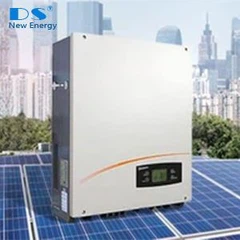
Inverter: It converts DC electrical energy into AC electrical energy and realizes synchronization and regulation with the power grid through the VSG control unit. In the energy - storage VSG system, the VSG control is usually applied to the energy - storage converter or the integrated converter because the energy - storage system has the ability of bidirectional power flow, which is more suitable for simulating the active and reactive power control of synchronous generators.
VSG Control Unit: It is the core of the system. By simulating the rotor motion equation and reactive - voltage control equation of synchronous generators, it realizes the regulation of the frequency and voltage of the power grid. The VSG control unit also includes a power calculation and filtering module, which collects the output voltage and current and performs corresponding filtering processing to eliminate the influence of high - frequency noise and grid disturbances5.

3.Support Role of Energy Storage VSG for the Power Grid
3.1Frequency Support
Inertia Support: In the power system, traditional synchronous generators play a key role in the stability of the system frequency by virtue of their rotational inertia. When the grid frequency fluctuates, the rotational inertia of synchronous generators can absorb or release kinetic energy, thereby slowing down the rate of change of the frequency. Energy storage VSG simulates the rotor inertia of traditional generators through virtual inertia. When the grid frequency changes, VSG can quickly release or absorb energy to slow down the rate of change of the frequency. For example, when the grid frequency drops suddenly, the VSG with virtual inertia will release energy according to the rotor motion equation, increasing the output of active power and suppressing the further drop of the frequency.
Frequency Regulation: VSG can participate in the primary frequency regulation of the power grid through the power - frequency droop control strategy. It configures a frequency - modulation dead - zone of 2% of the rated power/0.1 Hz and uses droop control to achieve automatic frequency regulation within the range of ±0.5 Hz, with a response time of <100 ms. When the grid frequency deviates from the rated value, VSG will adjust the output of active power according to the power - frequency droop characteristic to make the grid frequency return to the stable range6.
3.2Voltage Support
Reactive - Voltage Droop Control for Voltage Regulation: VSG controls the output voltage by simulating the excitation system of synchronous generators, that is, through the reactive - voltage droop characteristic. It calculates the reactive power deviation value and then adjusts the voltage to realize the effective control of the system voltage. In the power grid, when the voltage fluctuates, VSG can adjust the output reactive power according to the reactive - voltage droop characteristic. For example, when the grid voltage drops, VSG will increase the output of reactive power, and the reactive power will act on the grid to raise the voltage; when the grid voltage rises, VSG will reduce the output of reactive power to lower the voltage.
Dynamic Reactive Support in Weak Grids: In weak - grid or island - mode situations, energy - storage VSG can be used as a voltage source to provide support. In weak - grid areas, the grid impedance is relatively high, and the voltage and frequency are more likely to fluctuate. VSG can improve the voltage stability by providing reactive compensation. For example, in some remote areas with weak power grids, VSG can adjust the output reactive power in real - time according to the voltage situation of the power grid, compensating for the reactive - power shortage of the power grid and maintaining the stability of the voltage7.
3.3Improvement of Power Grid Stability
Suppression of System Oscillation: VSG control simulates the damping characteristics of synchronous generators, which can effectively suppress system oscillation and improve the dynamic response performance of the system. In a power system with a high proportion of renewable energy sources, due to the lack of damping of power electronic devices, the system is prone to power oscillation under certain disturbances. VSG can introduce virtual damping through control algorithms. When the system has power fluctuations or oscillations, the virtual damping will play a role in suppressing the oscillation and making the system quickly return to a stable state.
Enhancement of Fault - Ride - Through Capability: VSG technology can enhance the fault - ride - through capability of energy - storage systems. When the grid voltage drops temporarily, VSG can help the power grid recover through reactive support. For example, in the case of low - voltage ride - through (LVRT), VSG can adjust the output reactive power according to the voltage drop situation, provide reactive compensation for the power grid, and help the power grid quickly restore voltage stability, avoiding the disconnection of the energy - storage system during grid disturbances and improving the stability and reliability of the power grid.
Seamless Switching between Grid - Connected and Island - Mode: Energy - storage VSG supports seamless switching between grid - connected and island - mode. In micro - grids, during the day, photovoltaic power generation can operate in PQ mode, and at night or in island - mode, it can be switched to VSG mode to maintain the stability of the micro - grid. This seamless - switching capability ensures the continuous power supply of key loads (such as hospitals, data centers) and improves the reliability and flexibility of the power system8.
4.Application scenarios
High-proportion new energy access scenarios: With the large-scale integration of new energy, the inertia and short-circuit capacity of the power grid have decreased, and the stability of frequency and voltage is facing challenges. Both virtual synchronous generators and grid-structured energy storage have significant application value in this scenario. They can provide necessary inertial and damping support for new energy power generation systems, enhance the stability and reliability of the power grid, increase the capacity to accommodate new energy, and ensure the safe and stable operation of power systems with a high proportion of new energy.

Microgrid scenario: In a microgrid scenario, whether it is grid-connected operation or off-grid operation, a stable and reliable power supply is required to maintain the stability of the system's voltage and frequency. The energy storage system controlled by virtual synchronous generators can provide stable power support for microgrids just like traditional diesel generators, achieving smooth switching and independent operation of microgrids. Grid-forming energy storage, based on virtual synchronous generator technology, can serve as the core power source of microgrids, build and support the stable operation of microgrids, and enhance the power supply reliability and power quality of microgrids.

Grid-side auxiliary services: Grid-structured energy storage participates in auxiliary services such as frequency regulation and voltage regulation, and provides inertia response and dynamic support through VSG technology.
Weak power grids and remote areas: In areas with weak power grid strength or remote regions, grid-structured energy storage provides short-circuit capacity and voltage support through VSG technology, reducing reliance on diesel generators9.

1.CSDN, energy storage virtual synchronous generator technology.
2.CSDN, grid-connected photovoltaic hybrid energy storage system based on virtual synchronous generator with Simulink simulation.
3.Li Yongli, Li Yi. Power distribution and virtual inertia control method for photovoltaic hybrid energy storage systems based on virtual synchronous generators. CN202211422434.1 [2025-04-20].
4.Dai Jiaoyang, Electrical Engineering. Research on Power Distribution Strategy and Stability of Hybrid Energy Storage Virtual Synchronous Generator System [D] Huazhong University of Science and Technology [2025-04-20].
5.CSDN, Virtual Synchronization VSG grid-connected Active and Reactive Power Following Research on Photovoltaic Energy Storage (implemented through Simulink simulation).
6.National high-end exchange Platform for scientific research papers and technological Information, improving the control strategy of photovoltaic storage VSG under unbalanced grid voltage.
7.VIP Information, Energy Storage Type static reactive power generation device and its self-synchronous voltage source control.
8.NSTL, Virtual Synchronous Generator Adaptive Control of Energy Storage Power Station Based on Physical Constraints.
9.CSDN, The Relationship between Virtual Synchronous Generators and Grid-structured energy Storage.