Introduction
With the rapid growth of the new energy industry in recent years, land resources for PV installations have become increasingly scarce. To maximize the efficient utilization of PV systems across various application scenarios, Flexible PV Mounting System has emerged as an innovative solution.

Working Principle
The core principle of PV flexible supports lies in building a "tension balance system", achieving stable support through prestress tensioning and spatial cable net structure. Its working process can be summarized in three points:
- Foundation Fixation: Concrete piles or steel structure columns are installed at both ends of the construction area as fixed endpoints of the tension system. In some complex scenarios, anchor rods and stay cables are added to enhance anchoring effect.
- Tension Construction: High-strength steel strands and other flexible materials are tensioned and fixed between the endpoints. Prestress is applied through a graded tensioning process to form a stable load-bearing structure, with the tension deviation strictly controlled within ≤5%.
- Module Installation: PV modules are fixed on the load-bearing cables through special clamps to form an integral array. The cable net structure can slightly deform with environmental changes (such as temperature expansion and contraction, wind impact), dispersing stress while maintaining the stable posture of modules to avoid structural damage.

This design breaks the load-bearing limitations of rigid supports, achieving the effect of "flexibility with rigidity". It can absorb external load energy through flexible deformation and maintain overall stability through prestress locking, resulting in better risk resistance in extreme environments.
Key Technical Elements
1.Core Material Selection
Materials are the foundation of flexible support performance, requiring a balance of strength, weather resistance, and lightweight properties. Load-bearing cables mostly adopt 1860MPa grade galvanized steel strands or filled epoxy steel strands-the former offers cost control, while the latter provides excellent corrosion resistance for high-salt fog and high-humidity environments. Module clamps are made of weather-resistant polymers or 316 stainless steel to ensure no aging or cracking during long-term use. The anchoring system selects ribbed rebar anchor rods (for conventional land scenarios) or basalt fiber composite tendons (for offshore high-corrosion scenarios) based on the application, balancing strength and corrosion resistance.
2.Prestress Control Technology
Prestress is the core guarantee of support stability, requiring precise design and construction. A graded tensioning process is adopted to gradually apply tension in multiple stages, dynamically balancing the stress of the cable net and avoiding cable relaxation or fracture caused by local stress concentration. Meanwhile, professional equipment is used to monitor cable tension in real-time, with dynamic adjustments based on ambient temperature changes to ensure the tension deviation does not exceed the design threshold throughout the life cycle and maintain the stable geometric shape of the support.
3.Wind Resistance and Structural Optimization Design
To address wind load challenges in different environments, flexible supports adopt a composite design of "spatial cable net + wind resistance system". Main cables bear the main load in the east-west direction, while inter-row flexible wind-resistant cables and transverse trusses are added in the north-south direction to form a three-dimensional stress balance system. Verified by wind tunnel tests (test wind speed generally exceeds 46m/s), optimizing the damping characteristics of the cable net can effectively resist typhoons or strong gusts of magnitude 12-17, avoiding module collision and microcracks. In addition, the large-span design reduces the number of piles (pile usage per MW can be reduced from 329 to 64), minimizing terrain damage and construction costs.
4.Anchoring System Technology
The anchoring system is the key to tension transmission, directly affecting the overall safety of the support. Among anchor rod products, HPB300 steel anchor rods have low elongation and convenient installation, suitable for dry land environments. Galvanized unbonded steel strands for stay cables are preferred for offshore and coastal projects due to their excellent corrosion resistance. The key technology lies in the sealed anti-corrosion treatment of anchorages and cables, ensuring no leakage or corrosion in high-humidity and high-salt fog environments and extending service life.
Application Scenarios
1.Complex Mountainous and Hilly Areas
Flexible supports can adapt to terrains with slopes exceeding 40°. Through slope-following layout and flexible arrangement, full module coverage is achieved without extensive land leveling. In the Huaneng Qin County Project in Shanxi, the supports are adjusted according to the undulation of the hillside, significantly improving the board layout density per unit area. The Lanzhou Honggu Project in Gansu reduces foundation engineering through large-span design, maximizing the protection of fragile ecological landforms.


"PV+" Integration Scenarios
PV+Agriculture: With a 33-meter large span and 5.5-meter high headroom design, it can be erected above farmland, orchards, and mushroom greenhouses. The Huadian Yichuan Project in Shaanxi realizes the coordination of "PV+apple", maintaining the apple light transmittance above 70% and ensuring the dual improvement of agricultural output and power generation benefits.

PV+Fishery: Suitable for coastal and inland fish pond scenarios, the typhoon-resistant design and high headroom layout not only ensure the safety of PV facilities but also do not affect fishery operations. The Wenchang 100MW PV-Fishery Project in Hainan achieved "zero damage" during magnitude 17 typhoons, and the Qingyuan Project in Guangdong also reduced water evaporation in fish ponds.

PV+Medicinal Planting: The Yimen Project in Yunnan erected supports above Chinese herbal medicine planting areas, realizing "power generation on the panels and planting under the panels" and promoting the in-depth integration of new energy and characteristic agriculture.

3.Ecologically Sensitive and Special Areas
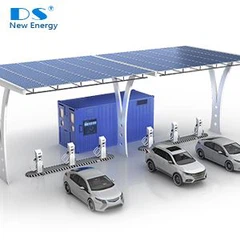
In ecologically fragile areas such as deserts and the Loess Plateau, flexible supports reduce pile excavation and surface damage. The micro-environment formed under the PV panels reduces water evaporation and protects vegetation growth. In scenarios such as highway service areas and slopes, the 15-35 meter large-span design can adapt to spaces such as parking lots and charging and swapping stations, helping build "zero-carbon service areas".

Industry Trends and Market Status
1.Sustained Market Growth The global PV flexible support industry is experiencing a period of rapid development. It is expected that the total output value will achieve a compound annual growth rate (CAGR) of 8.2% from 2025 to 2031, exceeding 5.796 billion US dollars by 2031. As a major production and application market, China's market demand continues to expand driven by mountainous PV development and "PV+" policies, with the market share of leading enterprises gradually increasing.
2.Technological Innovation Directions
- Integration of Flexibility and Tracking: Combining intelligent tracking technology with flexible supports to achieve ±60° solar tracking. The Kubuqi Project in Inner Mongolia increased annual power generation by 12.3% compared with fixed structures, adapting to the "peak-valley electricity price" mechanism to improve benefits.
- Intelligent Upgrade: Optimizing tension control and tracking strategies through AI algorithms to enhance adaptability in extreme weather and reduce operation and maintenance costs.
- Material Iteration: Adopting zinc-aluminum-magnesium coating, basalt composite materials, etc., to further reduce steel usage, improve corrosion resistance, and extend the service life of supports.
3.Layout of Major Manufacturers Currently, the market forms a competitive pattern with the participation of Chinese and foreign enterprises. International manufacturers include Schletter Group and ESDEC, while domestic leading enterprises include Longi Green Energy Technology, Trina Solar, and Arctech Solar. Among them, Longi Green Energy Technology holds a leading position in PV-fishery and mountainous projects with its typhoon-resistant technology and multi-scenario solutions.

Conclusion
With the core logic of "flexible structure + tension balance", PV flexible supports break the limitations of traditional PV supports on terrain and space, realizing the multiple values of "safety and reliability, cost reduction and efficiency improvement, and ecological friendliness". Their characteristics of large span, high headroom, and strong adaptability not only broaden the boundaries of PV applications but also promote the in-depth integration of new energy with agriculture, fishery, and ecological protection, becoming a key supporting technology in the context of energy transition.
With the iteration of material technology and intelligent upgrading, flexible supports will play a greater role in fields such as "desert, Gobi, and desert" development, offshore PV, and existing project renovation, injecting sustained momentum into the high-quality development of the PV industry. In the future, the diversified application models centered on flexible supports will further release land value, helping achieve the coordinated development of energy and ecology under the "dual carbon" goals.
Keyword
Flexible PV Mounting System,prestress tensioning,"PV+" Integration Scenarios,PV+Fishery,PV+Medicinal Planting,flexible solar future Europe,differences between fixed‑tilt and tracker mounting systems for solar