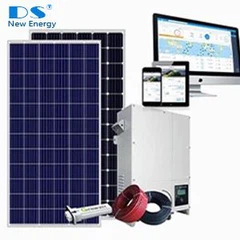
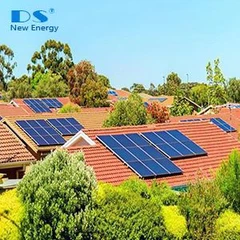
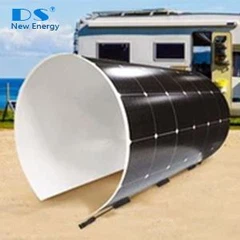

【Product introduction】 | |
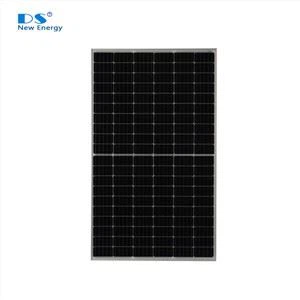
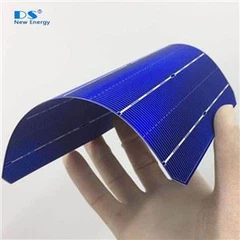
Cell | Mono 156.75mm HJT bifacial |
No. of cells | 60(6×10) |
Rated Maximum Power(Pmax) | 320W |
Junction Box | IP68 |
Maximum System Voltage | 1000V/1500V DC(IEC) |
Operating Temperature | -40℃~+85℃ |
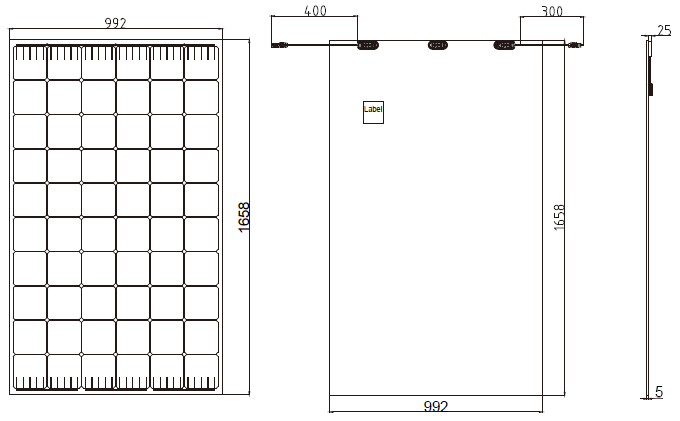
Dimensions | 1658mm×992mm×5mm |
Weight | 20kg±3% |
【Product description】
Photovoltaic systems using heterojunction technology (HJT) modules outperform any other PV systems which will help PV power to survive without feed-in tariffs and be competitive with grid electricity costs.
Levelised cost of electricity (LCOE) is one of the primary metrics for the cost of electricity produced by both utility scale and distributed power systems. The fastest path to lower LCOE is to introduce high efficiency solar cell concepts like the heterojunction technology (HJT).
Bifacial BIPV HJT solar panel achieves high power of 320W.
The compact and lightweight dual-glass module with 2.0mm tempered glass was successfully developed in 2014. Now, thinner, lighter dual-glass module with 1.6mm tempered glass encapsulated with high efficiency HJT solar cell can be produced. Due to the material and structure characteristics, dual-glass module fundamentally avoid defects such as PID, micro cracks of cells, and snail trail ,which can reduce the investment cost, transport cost and the operation risk of power plants, etc.
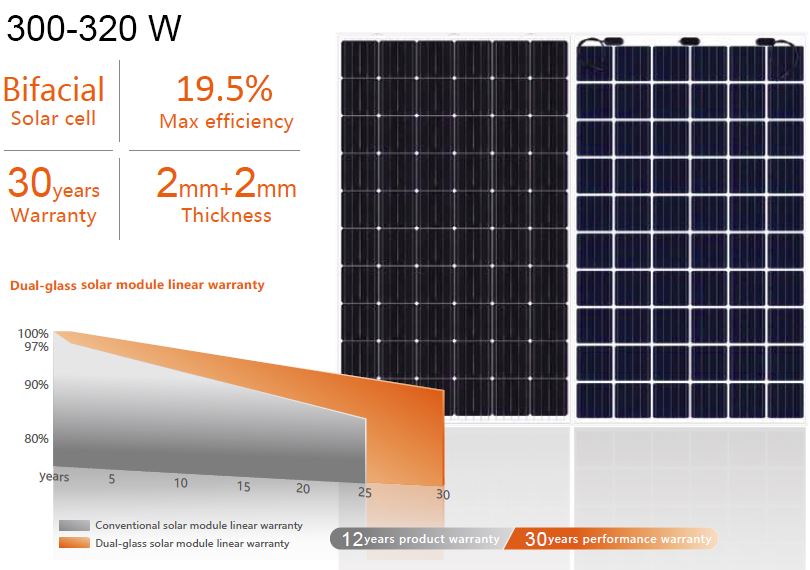
1 KEY FEATURES

2 MECHANICAL DIAGRAMS
3 ELECTRICAL PARAMETERS at STC
Rated Maximum Power(Pmax) [W] | 305 | 310 | 315 | 320 |
Open Circuit Voltage(Voc) [V] | 39.85 | 40.15 | 40.46 | 40.86 |
Maximum Power Voltage(Vmp) [V] | 33.23 | 33.59 | 33.92 | 34.25 |
Short Circuit Current(Isc) [A] | 9.73 | 9.77 | 9.84 | 9.89 |
Maximum Power Current(Imp) [A] | 9.18 | 9.23 | 9.29 | 9.35 |
Module Efficiency [%] | 18.5 | 18.8 | 19.2 | 19.5 |
Power Tolerance | 0~+5W | |||
Temperature Coefficient of Isc(α_Isc) | 0.048%/℃ | |||
Temperature Coefficient of Voc(β_Voc) | -0.271%/℃ | |||
Temperature Coefficient of Pmax(γ_Pmp) | -0.336%/℃ | |||
STC | Irradiance 1000W/m², cell temperature 25℃, AM1.5G | |||
Solar photovoltaic system, also known as photovoltaic, refers to the photovoltaic effect of photovoltaic semiconductor materials and the solar energy into direct current facilities. At the core of the photovoltaic facility are solar panels. At present, the main semiconductor materials used for power generation are monocrystalline silicon, polycrystalline silicon, amorphous silicon and cadmium telluride, etc. In recent years, countries are actively promoting the application of renewable energy, the development of photovoltaic industry is very rapid.




Hot Tags: 320w solar pv panel, China, suppliers, manufacturers, factory, made in China