Energy storage systems play a crucial role in modern power systems, especially with the increasing penetration of renewable energy sources. The four - quadrant operation of energy storage is an important concept that describes the power flow characteristics between the energy storage system and the power grid.
According to GB/T 44026 - 2024 "Technical Specification for Prefabricated Cabin - type Lithium - ion Battery Energy Storage System", the power output of the energy storage system should be adjustable in four quadrants1.

1.Basic Concept of Energy Storage Four Quadrants
1.1Understanding Power Factor
There are 4 quarants which need to be considered.
In the first quadrant, both the active power (P) and reactive power (Q) of the energy storage system are greater than 0. The energy storage system is in a discharging state, releasing active power to the grid and providing reactive power compensation at the same time. This is usually the case when the grid needs additional active power and reactive power support during peak - load periods2.

In the second quadrant, the active power of the energy storage system is less than 0, and the reactive power is greater than 0. The grid supplies active power to the energy storage system, while the energy storage system provides reactive power compensation to the grid. This situation can occur when the grid has a leading power factor and needs inductive reactive power compensation, and the energy storage system can absorb active power for charging while providing reactive power2.

In the third quadrant, both the active power and reactive power of the energy storage system are less than 0. The grid supplies both active power and reactive power to the energy storage system, and the energy storage system is in a charging state and absorbs reactive power from the outside. This is the normal charging state of the energy storage system when the grid has sufficient power and the energy storage system needs to be charged2.

In the fourth quadrant, the active power of the energy storage system is greater than 0, and the reactive power is less than 0. The energy storage system supplies active power to the grid and absorbs reactive power from the outside. This can be used to regulate the voltage of the grid during certain operating conditions, for example, when the grid voltage is too high and needs capacitive reactive power compensation, the energy storage system can discharge active power while absorbing reactive power2.

1.2Calculating Power Factor
Using Pythagoras's Theorem we can calculate the 3rd parameter from any 2 of these parameters as follows3.
Pythagoras's Theorem states A² + B² = C²
In addition we use the rule SOHCAHTOA
Sine ϕ = Opposite/Hypotenuse
Cos ϕ = Adjacent/Hypotenuse
Tan ϕ = Opposite/Adjacent

1.3Power Factor Angle
The Power Factor Angle is also commonly referred to Phase Angle.
The term Power Factor (PF) is simply the ratio between Real or "True" Power (P) and Apparent Power (S). While Reactive Power (Q) is the reactive component.
Power Factor (PF) = Real Power KW (P) / Apparent Power KVA (S)
For example for Real Power = 80kW, and Reactive Power = 100kVA we have
PF = 80/100 = 0.8
The represents a loss of 20%!!! and can in many cased be much worse3.
2.Significance of Four - Quadrant Operation
The four - quadrant operation of the energy storage system has important significance for the stable operation and efficient management of the power system.
First of all, it can improve the power quality of the power grid. By adjusting the active and reactive power in different quadrants, the energy storage system can compensate for the power fluctuations and voltage instability caused by renewable energy sources, such as wind and solar power. For example, when the wind power output suddenly decreases, the energy storage system in the first quadrant can quickly release active power to maintain the stability of the grid frequency and voltage4.
Secondly, it can enhance the reliability of the power system. In case of grid faults or emergencies, the energy storage system can operate in different quadrants to provide emergency power support and reactive power compensation. For instance, during a power grid short - circuit fault, the energy storage system combined with a Static Synchronous Compensator (StatCom) can inject or absorb active and reactive power in antipathy with the line flows to damp the oscillations and stabilize the power system4.
Finally, it can improve the utilization efficiency of energy storage devices. The four - quadrant operation allows the energy storage system to charge and discharge at different times and under different power factor conditions, making full use of the capacity of the battery and other energy storage media4.
3.Realization Technologies of Four - Quadrant Operation
The realization of the four - quadrant operation of the energy storage system mainly depends on the power conversion system (PCS) and the control strategy.
For the PCS, it usually adopts a multi - level converter topology, such as the cascaded H - bridge (CHB) converter. The CHB converter - based battery energy storage system (BESS) can realize the four - quadrant operation by controlling the power flow between the battery and the grid5. As proposed in the paper "Four Quadrants Operation Control of High - voltage Transformerless Large - capacity System Integrating Battery Energy Storage and Reactive Power Compensation", by vector decomposition of the closed - loop generated modulation phase voltage, the grid - side power factor can be maintained and all sub - modules power factor can be compensated without exceeding the micro - cycles boundary6.
In terms of control strategy, a comprehensive control strategy is required. For example, the control strategy proposed for the CHB - based BESS includes quantitative decomposition of battery current components with LC filter, obtaining the feasible range of avoiding micro - cycles under four - quadrant operation, and analyzing the unified modulation strategy considering eliminating micro - cycles and inner - phase state of charge equalization7.
Another example is the four - quadrant power regulation system proposed by Tsinghua University Electrical Engineering Department and other units. This system combines energy storage and StatCom, and can provide power compensation, regulation and support functions for the randomness, waveform and uncertainty of new energy. It can respond to grid dispatch in 5 milliseconds and realize the rapid adjustment of active power from 0 to 100% within 150 milliseconds8.
4.Application Cases of Four - Quadrant Operation
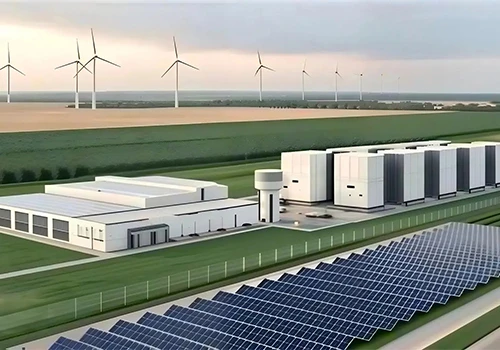
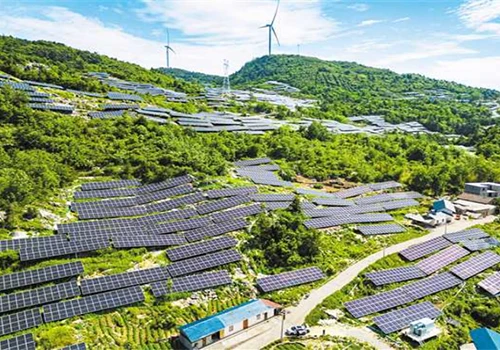
In some large - scale wind - solar - storage power plants, the energy storage system can operate in different quadrants according to the output of wind and solar power and the demand of the grid. When the wind and solar power are abundant, the energy storage system can operate in the third quadrant to charge and store energy; when the wind and solar power are insufficient, it can operate in the first quadrant to discharge and supply power to the grid.
In the power distribution network, the energy storage system can also be used for voltage regulation and reactive power compensation. By operating in the second and fourth quadrants, it can adjust the voltage of the distribution network and improve the power factor of the user side9.
The four - quadrant operation of energy storage systems is an important technology in modern power systems. It can improve power quality, enhance system reliability and increase the utilization efficiency of energy storage devices. With the continuous development of new energy technologies and the increasing demand for power system stability, the four - quadrant operation of energy storage systems will play an increasingly important role in the future power system.
[1]GB/T 44026 - 2024, Technical Specification for Prefabricated Cabin - type Lithium - ion Battery Energy Storage System.
[2]Special Committee on Energy Storage Technology, Introduction to Technical Requirements for Power Control of Energy Storage Systems.
[3]Fastron Electronics, How Power Factor Correction Works.
[4]Douding.com, A four-quadrant energy storage planning method for Enhancing the photovoltaic Consumption Capacity and Safety of Distribution networks.
[5]IEEE, Four-quadrant Operation Control of cascade H-bridge converter Battery Energy Storage System.
[6]Proceedings of the CSEE, Four-quadrant Operation Control Technology for High-voltage Direct-hung large-Capacity Systems with Battery Energy Storage and reactive Power Compensation.
[7]AEPS, an optimized configuration strategy for energy storage in distribution networks considering four-quadrant power output.
[8]Tsinghua University News, Four-Quadrant Power Regulation System.
[9]Douding.com, Research on Direct Power + Control Strategy of BESS System.