Three standards decide whether an on-grid system is safe and bankable: IEC 61215 for module design qualification, IEC 61730 for module safety, and IEC 62109 for inverter safety. They are often quoted interchangeably in quotations. They are not interchangeable.
This article explains what each standard covers, how to read a certificate, and which quality documents should travel with a shipment.
What IEC 61215 covers
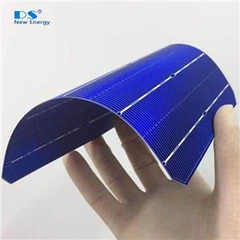
IEC 61215 is a design qualification and type approval standard for crystalline silicon PV modules. It confirms that a module design can survive the mechanical and climatic stresses of long-term outdoor operation.
The test sequence includes thermal cycling, humidity freeze, damp heat, mechanical load, hail impact, hot-spot endurance and potential-induced degradation (PID). A module that passes has demonstrated that the design is robust - not that every production unit is identical.
What IEC 61730 covers
IEC 61730 is the safety standard for PV modules. It addresses electrical insulation, fire resistance, accessibility and protection against electric shock.
The standard is split into two parts: construction requirements and testing requirements. It is assessed together with IEC 61215 in most certification programmes, which is why certificates often list both standards on one document.
What IEC 62109 covers
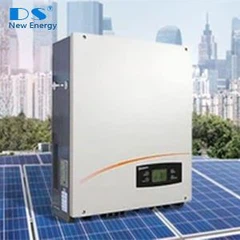
IEC 62109 applies to power conversion equipment used in PV systems. Part 1 covers general safety requirements; Part 2 covers grid-connected power converters.
For an on-grid system, IEC 62109-2 is the relevant document for the inverter. It covers protection against electric shock, insulation coordination, thermal performance and grid-interactive safety functions.
IEC certification is not grid-code compliance
A common misunderstanding: an inverter certified to IEC 62109 is safe, but it is not automatically approved for connection in every country. Grid connection is governed by national codes.
|
Market |
Typical grid code |
What it governs |
|
Germany |
VDE-AR-N 4105 |
LV connection, protection settings, export behaviour |
|
Italy |
CEI 0-21 |
LV connection and interface protection |
|
EU (harmonised) |
EN 50549-1 |
Connection of generating plants to LV networks |
|
UK |
G99 |
Connection of generation to the distribution network |
|
Australia |
AS/NZS 4777.2 |
Inverter requirements for grid connection |
|
Brazil |
ABNT NBR 16149 |
Interface requirements for grid-connected inverters |
Confirm the destination country and grid operator before the order is placed. Some inverter models support multiple grid profiles through firmware; others are region-locked.
How to read a certificate
|
Field |
What to check |
|
Certificate holder |
Legal name must match the supplier or manufacturer you are buying from |
|
Manufacturing site |
Factory address must match the production site |
|
Standard and edition |
Confirm the current edition, for example IEC 61215-1:2021 |
|
Model list |
Your exact model must appear; a family listing may or may not cover it |
|
Issuing laboratory |
Recognised test lab with a verifiable certificate database |
|
Validity |
Expiry date and surveillance status |
A certificate is a design approval for a defined family produced at a defined site. It is not a batch quality record.
The QC documents that should travel with a shipment
|
Document |
What it proves |
|
Incoming material inspection record |
Cells, glass and backsheet were checked before production |
|
EL images |
No hidden micro-cracks in the sampled modules |
|
Flash test report |
Measured power at STC for the batch |
|
Pre-shipment inspection report |
Quantity, appearance, packing and accessories match the order |
|
Certificate copies |
Design and safety approvals for the delivered models |
|
Packing list by container |
What is inside each container, and where it is going |
Buyers who receive only a certificate and a packing list are missing the batch-level evidence. Ask for all six.
Datasheet parameters that matter for on-grid design
Power tolerance defines the minimum guaranteed output. A 0/+5 W tolerance means the module will not be below its nameplate rating.
Temperature coefficient of Pmax determines output loss as the module heats. A coefficient of −0.30%/°C is better than −0.35%/°C for the same nameplate power.
First-year and annual degradation drive long-term yield. A typical warranty is 1% in year one and 0.4% per year thereafter for N-type TOPCon.
Maximum system voltage must match the inverter and string design - 1,100 V or 1,500 V are the common classes.
IP rating and fire rating matter for rooftop approval in many markets, particularly where building codes require a specific fire class.
How quality control should be structured
A credible QC flow has four gates: incoming material inspection, in-process inspection, final electrical testing and pre-shipment inspection. Each gate produces a record, and each record is traceable to a batch.
For modules, final testing should include EL inspection after lamination and flash testing at STC. For inverters, burn-in testing and protection-function checks should precede packing. For complete systems, the packing list should be checked against the roof layout, not only against the purchase order.
How to read a flash test report
A flash test report records the measured electrical output of a module or batch under Standard Test Conditions: 1,000 W/m² irradiance, 25°C cell temperature and AM1.5 spectrum.
Check four columns: Pmax, Voc, Isc and Impp. Compare the measured Pmax with the nameplate rating and the stated tolerance. Then check the distribution across the batch - a tight spread indicates a stable production process; a wide spread suggests mixed cell bins.
Also check the calibration date of the tester and the report date. A flash report without a tester calibration reference is a spreadsheet, not a quality record.
PID, LID and LeTID: what the datasheet does not tell you
Potential-induced degradation (PID) is a voltage-driven loss that appears in modules exposed to high system voltage and humidity. Light-induced degradation (LID) occurs in the first hours of operation. LeTID is a slower, temperature-dependent variant seen in some cell technologies.
Datasheets rarely state the tested PID result at module level. Ask for the PID test report: the standard sequence applies −1,000 V at 85°C and 85% relative humidity for 96 hours, and the pass criterion is typically less than 5% power loss.
For rooftop systems in humid climates, this document matters more than a marginal efficiency difference between two module models.
Incoming inspection at the site
The last quality gate is the one most buyers skip. Before installation, inspect a sample of modules for glass cracks, frame damage, junction box adhesion and connector condition. Check the serial numbers against the packing list.
For inverters, confirm the model, the firmware version and the grid profile before mounting. A wrong grid profile discovered after commissioning can delay approval by weeks.
Record the inspection with photographs and share them with the supplier within the claim window. Most transport damage disputes are resolved by evidence, not argument.
Frequently asked questions
Is IEC 61215 a quality guarantee?
No. It is a design qualification. It shows the design survived defined stress tests; it does not guarantee that every production unit matches the tested sample. Batch flash data and EL images provide that evidence.
Do I need IEC 61730 if the modules already have IEC 61215?
Yes. The two standards cover different things - performance durability and electrical safety. Most certification programmes assess them together, and certificates usually list both.
Can a system be certified as a whole?
Rarely. Certification applies to components: modules, inverters, cables and connectors. The assembled system is approved through grid-connection rules and, in some markets, an installation inspection.
What is the difference between a certificate and a test report?
A certificate confirms that a design family passed type testing at a recognised laboratory. A test report records measurements for a specific sample or batch. Both are useful; only the report describes your goods.
Which documents should I keep for customs and warranty?
Keep the certificate copies, batch flash test report, packing list and commercial invoice. For warranty claims, the serial numbers and flash data are usually required to link a failed module to its production batch.
Request the full document set
Tell us the models you are sourcing and the destination country. We will send the certificate list, batch test documentation and grid-code options for that market.