

What Is a 10MW Utility-Scale Solar Power System?
A project-scale, grid-connected PV plant - specified, certified and engineered the way developers and EPCs procure it.

A 10MW utility-scale solar power system is a ground-mounted, grid-connected photovoltaic (PV) installation with an inverter AC nameplate of approximately 10 MW, sized to feed electricity into the local utility grid or to supply a large industrial load with grid export. Unlike residential or small commercial rooftop systems, a 10MW plant is treated as a project asset: it requires a defined electrical architecture - string, DC collection, inverter stations, LV/MV collection, transformer and grid point of connection - compliance with the local grid code, and equipment that is certified and bankable for institutional financing.
In DSNeg's reference design, the plant is built from 20,000 TOPCon modules delivering 11.6 MWp of DC capacity and 80 central inverters delivering 10 MW of AC output, giving a DC/AC ratio of 1.16. The system is supplied as a complete equipment scope - modules, inverters, mounting, cabling, connectors, protection and monitoring - with optional single- or dual-axis tracking to increase annual yield. Final configuration is adjusted to your site, solar resource and interconnection requirements.
Designed as a project asset
A defined electrical architecture from PV string to grid point of interconnection, with protection coordination and a single-line diagram - not a bag of components.
Built to be financed
Certified, traceable equipment is what banks, insurers and equity partners underwrite. Certification basis and BOM traceability are confirmed in your quotation.
Configured to your site
Module technology, inverter brand, mounting (fixed or tracking) and supply scope (equipment vs EPC) are adjusted per project specification.
10MW Reference Configuration & Equipment List
The table below is a reference bill of materials for the standard 10MW scope. Final quantities are confirmed during detailed engineering against your single-line diagram, string design and site conditions.
| No. | Component | Reference Specification | Project Design Consideration |
|---|---|---|---|
| 1 | Solar modules |
TOPCon 630 W - 19,000 pcs = 12 MWp DC. Module efficiency: confirm efficiency % |
Module efficiency, temperature coefficient, bifaciality and warranty must be confirmed per destination market and project target cost. |
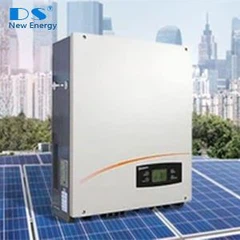
| 2 | Grid-tied inverter | 350 kW string inverter - 30 pcs = 10 MW AC; AC 380 V / 418 V, 3-phase, 50/60 Hz. Brand/model: confirm inverter brand | Verify MPPT voltage range, maximum input current, and grid-code functions (anti-islanding, reactive power control, frequency response, ride-through). |
| 3 | Mounting system | Ground-mount racking - fixed tilt, or single-/dual-axis tracking | Foundation, pile, tilt, row spacing, wind and corrosion design are site-specific; tracking selection is an ROI decision (see System Design). |
| 4 | DC / AC cable | Single-core 4 mm² and 10 mm² PV cable - reference 170,000 m | Confirm cross-section and total length against voltage-drop, ampacity, routing and installation checks. |
| 5 | DC connectors | MC4 - reference 3,400 pairs | Confirm approved mating type and final string count from the single-line diagram. |
| 6 | Plant monitoring | Wifi / SCADA monitoring system - 1 set | Confirm telemetry scope, meteorological sensors and utility communication requirements. |
| 7 | Balance-of-system | Combiners, protection, earthing, LV distribution | Final protection coordination and single-line diagram are required before energization. |
Note on AC vs DC
"10MW" refers to the inverter AC nameplate (30 × 350 kW = 10.5 MW AC). The module DC capacity is 12 MWp (20,000 × 580 W). Always state whether your target is DC capacity, AC capacity or permitted grid export when requesting a quotation.
System Design: Land, DC/AC Ratio & Tracking
Three variables decide your land budget, your clipping trade-off and your lifetime yield - here is how the reference design handles each.
Land Requirement
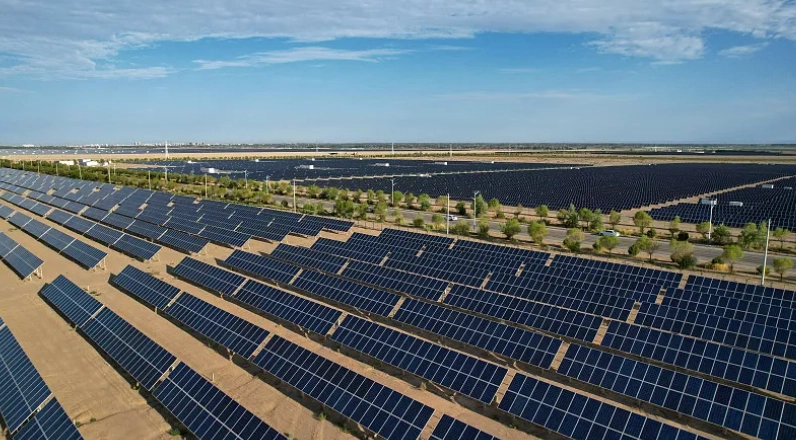
Based on an average array output of roughly 150 W per square metre, the 12 MWp DC array requires about 67,000 m² of module area. Allowing for access roads, row spacing, O&M clearance and equipment compounds, total site footprint is typically around 80,000 m² - approximately 8 hectares. Actual land needs vary with module dimensions, row spacing, tilt, slope, setbacks and grid infrastructure; a layout is produced once your site boundary and survey data are available.
DC/AC Ratio of 1.2
The reference design uses a DC/AC ratio of 1.2 (12 MWp DC ÷ 10 MW AC). This oversizing captures more DC energy than the inverters can pass at any moment, trading a small amount of clipping for higher lifetime yield. The optimum ratio is site-specific and should be modelled with your local solar resource, export limit and inverter clipping behaviour before final sizing - it is one of the levers that moves your project's lifetime energy.
Fixed vs Tracking Mounting
Fixed-tilt racking is the lower-capital baseline. Single-axis tracking can increase annual production by roughly 20%, and dual-axis tracking by roughly 30%, versus fixed mounting - at the cost of added equipment, foundations and installation. The right choice is an ROI decision: model the extra yield against the extra balance-of-system capital for your specific project, and let the project IRR decide.
Energy Yield & Project Economics
Annual generation is what sets your project revenue - here is how to think about it for an 11.6 MWp DC plant.
Annual generation for a 10MW plant is driven by your site's solar resource, array orientation and tracking, system losses and availability. As a planning reference, utility-scale PV in mid-latitude, high-irradiance locations commonly achieves a specific yield in the range of 1,200–1,600 kWh/kWp per year (capacity factor ≈ 13.7%–18.3%). Treat these as estimates until a site-based energy model is run against your actual location.
For a credible yield figure, model the plant against your coordinates and array parameters. A preliminary estimate can be produced with a free, independent tool such as NREL PVWatts; project financing and insurance will typically require a detailed, independent yield (P50/P90) study. Because yield directly sets revenue, show LCOE (levelized cost of electricity) in your project model and show how module efficiency, tracking and the DC/AC ratio move the number. Clear, sourced figures in this section are what make a 10MW package bankable.
| Planning scenario | Specific yield (kWh/kWp·yr) | Capacity factor | Annual generation (11.6 MWp) | Notes |
|---|---|---|---|---|
| Low-irradiance / high-latitude reference | 1,200 | ≈ 13.7% | ≈ 13.9 GWh/yr | Fixed tilt, standard losses |
| Mid-latitude baseline | 1,400 | ≈ 16.0% | ≈ 16.2 GWh/yr | Fixed tilt, standard losses |
| High-irradiance + tracking | 1,600 | ≈ 18.3% | ≈ 18.6 GWh/yr | Single-axis tracking (+20% class) |
Planning reference only
Figures are derived from 11.6 MWp × assumed specific yield for planning purposes. Your quotation will include a site-based energy model (P50/P90) based on your coordinates, layout and tracking choice - required for project financing.
Grid Interconnection & Compliance
The single most common source of project delay - addressed before you buy, not after.
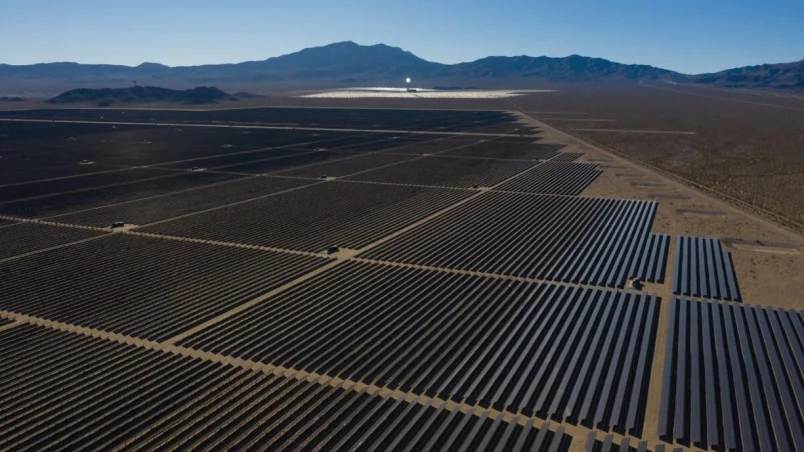
A grid-tied 10MW plant must be engineered to your utility's grid code and connected at an approved point of interconnection (POI) with the correct voltage, transformer arrangement, metering, earthing, protection settings and power-quality compliance. The design scope must confirm: the grid voltage and export limit at the POI; the utility's grid code (fault ride-through, reactive power control, anti-islanding, frequency response); protection coordination and short-circuit studies; and the metering/SCADA interface the utility requires. Documentation, inspection and commissioning of a grid-connected PV system follow IEC 62446-1, and local electrical and grid requirements may add further testing before energization.
Before Construction
- Approved grid connection conditions and export capacity
- Single-line diagram and equipment datasheets
- Short-circuit, protection coordination and cable studies
- Civil, geotechnical and mounting design
Wide Applications
- Equipment inspections and installation records
- PV string, insulation and electrical safety tests
- Inverter and protection commissioning reports
- Monitoring, metering and handover documentation
Blackout note
A grid-tied system generally stops generating when the utility supply is lost. The reference 10MW configuration does not include battery storage or islanding capability; backup or behind-the-meter storage is a separately engineered and approved system. Confirm whether your project needs storage - and to what supply scope - before quotation.
Certification

Customization, Manufacturing & Supply Terms
Module
Module Selection
TOPCon 580/630 W, HJT 700 W, Back-Contact 450/625 W, PERC 660 W - matched to efficiency and target cost.
Inverter
Inverter
Brand/model and AC voltage per grid code - confirm brand; MPPT and grid-code functions verified per project.
Mounting
Mounting & Tracking
Fixed-tilt, single-axis or dual-axis, engineered to your yield target and site.
$4000.00
Supply Scope
Equipment supply only → or EPC turnkey (engineering, logistics, installation, commissioning), defined in contract.
Compare 1MW / 5MW / 10MW On-Grid Systems
| Project Size | Inverter Reference | Module Reference | Typical Buyer | Collection Scope | Page |
|---|---|---|---|---|---|
| 1 MW | C&I-scale confirm | ≈ 1 MWp DC | C&I rooftop / ground | Small LV collection | 1MW → |
| 5 MW | Per 5MW scope | ≈ 5 MWp DC class | Mid-size ground development | LV + MV interface | 5MW → |
| 10 MW | 80 × 125 kW = 10 MW AC | 11.6 MWp DC | Utility-scale / large industrial | LV + MV + grid POI | This page |
FAQ
Q: Does "10MW" mean module (DC) capacity or inverter (AC) output?
A: "10MW" is the inverter AC nameplate (80 × 125 kW = 10 MW AC). Module DC capacity is 11.6 MWp (20,000 × 580 W) - a DC/AC ratio of 1.16. State your target as DC, AC or grid-export rating when requesting a quote.
Q: How much land does a 10MW solar power plant need?
A: Roughly 8 hectares (80,000 m²) total, of which about 67,000 m² is module area. Exact footprint depends on module size, row spacing, tilt, slope and setbacks.
Q: How much electricity does a 10MW plant produce per year?
A: Planning reference: ≈ 1,200–1,600 kWh/kWp per year (≈ 13.9–18.6 GWh for 11.6 MWp DC). Run a site-based model (e.g. NREL PVWatts) for a credible P50/P90 figure before financing.
Q: Is the medium-voltage transformer included in the 10MW system?
A: Define it in your inquiry. The reference scope covers modules, inverters, mounting, DC/AC BoS and monitoring; the MV transformer, switchgear and utility interface are confirmed against grid voltage and supply scope (equipment vs EPC).
Q: Does the 10MW system provide backup during a blackout?
A: No. Grid-tied systems generally stop generating when the grid is lost. Battery storage or islanding is a separately engineered and approved system.
Q: What certifications are required for utility-scale solar panels?
A: At minimum IEC 61215 (design/structural) and IEC 61730 (safety); add UL 61730 + CEC for North America, CE for the EEA, TÜV where required. Certification is what makes the plant bankable.
Q: What should I send a supplier for a 10MW quotation?
A: Site location and coordinates, target AC/DC/export capacity, grid-connection details (voltage, POI, grid code), site plan, preferred module/inverter/tracking, delivery schedule, and supply scope (equipment vs EPC). Module and inverter customization is supported under OEM/ODM.
Hot Tags: 10MW utility scale on grid solar power system,solar system,solar power,solar electricity,solar PV, China, suppliers, manufacturers, factory, made in China