



Source: discoveryalert.com

Capital allocation patterns across global markets indicate a fundamental shift occurring within energy infrastructure development. Traditional fossil fuel investment cycles, historically characterized by volatile commodity price exposure and geopolitical supply chain vulnerabilities, are increasingly being challenged by renewable energy technologies that demonstrate predictable cost reduction trajectories and declining operational complexity. This transformation reflects broader institutional investor recognition that energy security, price stability, and carbon risk mitigation now constitute core investment criteria rather than secondary considerations.
The convergence of technological maturation, policy framework evolution, and climate risk awareness has created unprecedented opportunities for long-term capital deployment strategies that prioritise sustainable energy infrastructure. Understanding these dynamics requires examining how solar energy investment trends are reshaping portfolio construction methodologies, risk assessment frameworks, and return expectation models across both developed and emerging market contexts.
Understanding the Solar Investment Landscape
Modern solar energy investment trends reflect the technology's transition from speculative venture capital territory to established infrastructure asset classification. This evolution fundamentally alters how institutional investors approach risk assessment, return expectations, and portfolio allocation decisions within the renewable energy sector.
Capital Allocation Framework Analysis
Contemporary solar investment strategies operate across three distinct market segments, each requiring specialised analytical approaches and risk management protocols:
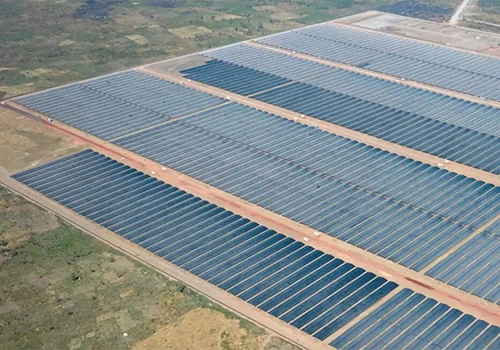
Utility-scale development projects exceeding 5 MW capacity that benefit from economies of scale and standardised engineering practices
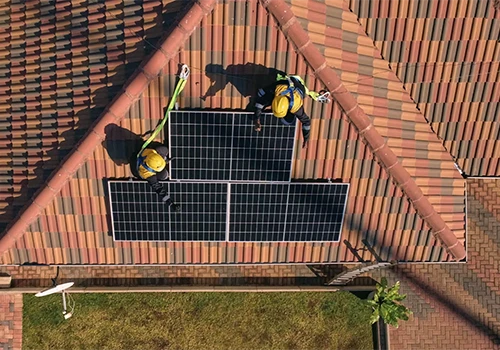
Distributed commercial installations serving industrial and commercial customers through on-site generation models
Emerging market deployment addressing energy access challenges while providing attractive risk-adjusted returns
However, geopolitical market insights indicate that global investment in clean energy technologies reached approximately $2.0 trillion in 2024, with renewable energy deployment accounting for the largest share of global power generation additions. Solar photovoltaic investment specifically grew substantially, with global annual capacity additions reaching approximately 418 GW in 2024, according to the World Energy Investment 2025 report.
Technology Cost Reduction Mechanics
Solar manufacturing demonstrates consistent learning curve economics that enable predictable investment planning scenarios. Historical data shows photovoltaic module costs declined from approximately $3.80 per watt in 2010 to around $0.30-0.40 per watt by 2024, validating the established relationship between cumulative production volumes and unit cost reductions.
Furthermore, this predictability contrasts sharply with fossil fuel price volatility, where commodity market fluctuations create significant uncertainty for project economics and return calculations. Institutional investors increasingly recognise that solar projects provide more stable cash flow profiles than traditional energy infrastructure investments.
Each doubling of cumulative solar manufacturing output has historically enabled approximately 20% cost reductions across the value chain, creating reliable forecasting frameworks for long-term capital deployment strategies.
Competitive Positioning Analysis
Solar energy has achieved grid parity with natural gas in numerous markets worldwide. The International Renewable Energy Agency reported in its 2024 Renewable Cost Database that the global weighted-average levelised cost of electricity for utility-scale solar photovoltaic installations was approximately $0.033-0.051 per kilowatt-hour, making it competitive with fossil fuel alternatives across most developed and emerging market contexts.
Market Penetration Indicators:
| Technology Segment | Cost Range ($/kWh) | Deployment Growth | Market Competitiveness |
|---|---|---|---|
| Utility Solar PV | $0.033-0.051 | +30% annually | Grid parity achieved |
| Distributed Solar | $0.080-0.120 | +15% annually | Retail rate competitive |
| Solar-Plus-Storage | $0.090-0.150 | +45% annually | Peak capacity competitive |
Regional Investment Dynamics and Market Maturation
Geographic capital deployment patterns reveal significant disparities in solar investment opportunities, regulatory frameworks, and risk-return profiles across global markets. In addition, understanding these regional variations proves essential for portfolio optimisation and risk management strategies.
Emerging Market Investment Characteristics
Developing economies present compelling solar investment opportunities despite facing distinct structural challenges that require specialised financing approaches and risk mitigation strategies.
India's renewable energy auction mechanisms have driven solar costs to competitive levels through transparent competitive bidding processes, achieving project costs of 2.5-3.0 USD/watt. This auction-based procurement model contrasts with subsidy-dependent frameworks in other emerging markets and provides transparent pricing discovery for capital allocation decisions.
Moreover, African market dynamics illustrate the complexity of emerging market deployment. Sub-Saharan Africa possesses exceptional solar resources, yet cumulative solar installations remain limited due to infrastructure constraints, financing barriers, and grid integration challenges. Off-grid solar minigrids in East Africa represent alternative deployment patterns where distributed generation bypasses infrastructure-constrained centralised grids.
Developed Market Consolidation Trends
Mature solar markets in Germany, Spain, California, and Australia are experiencing investment consolidation around large-scale projects and corporate renewable procurement strategies. This consolidation reflects market saturation at the utility level, with remaining growth driven by distributed commercial and industrial applications.
Currency risk management becomes critical for cross-border solar investments. Hedging strategies including forward contracts, currency swaps, and natural hedges typically cost 1-3% annually of project capital value, materially affecting project returns in high-inflation or volatile currency environments.
Infrastructure Development Prerequisites
Solar deployment in emerging markets frequently depends on underlying electrical grid modernisation requirements. Grid integration costs, including substation upgrades and interconnection facilities, vary from 5% to 30% of total project capital depending on grid proximity and interconnection requirements.
Regional electricity market structures fundamentally alter solar project economics:
Nodal pricing systems create higher value capture opportunities through locational marginal pricing
Real-time market mechanisms enable participation in ancillary service markets
Uniform pricing structures limit revenue optimisation potential but reduce operational complexity
Technology Cost Evolution and Investment Returns
Technological advancement trajectories within solar energy systems create increasingly sophisticated investment optimisation opportunities while simultaneously reducing traditional risk factors associated with emerging technology deployment. For instance, the battery recycling breakthrough demonstrates how innovation continues to improve project economics.
Battery Storage Integration Economics
Battery storage costs have declined from approximately $600-700/kWh in 2014 to approximately $100-150/kWh in 2024, according to industry cost trajectory analysis. This cost reduction fundamentally alters solar-plus-storage project economics, enabling economically viable energy time-shifting applications previously requiring substantial subsidy support.
Global battery storage capacity additions reached approximately 42-45 GW in 2024, indicating accelerating deployment rates across utility-scale, commercial, and residential market segments. Solar-plus-storage configurations create revenue optimisation opportunities through multiple value streams:
Energy arbitrage through time-shifting production to higher-value periods
Capacity value providing peak demand reduction services
Ancillary services including frequency regulation and voltage support
Grid resilience enhancing power quality and reliability characteristics
Manufacturing Efficiency Improvements
Contemporary solar manufacturing utilises high-throughput crystalline silicon processing with industrial-scale continuous production capabilities. Improvements include larger wafer sizes reducing edge waste, higher throughput diffusion furnaces, and automated defect detection systems collectively reducing manufacturing costs per watt.
Laboratory efficiency achievements for silicon solar cells have reached approximately 23-24% under standard test conditions, while commercial modules typically operate at 19-21% efficiency. Advanced technologies including perovskite-silicon tandem cells have demonstrated laboratory efficiencies exceeding 30%, though commercial deployment remains limited.
Smart Grid Integration Capabilities
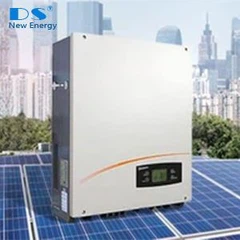
Smart inverter technology provides voltage regulation, reactive power support, and grid frequency response services beyond simple DC-to-AC conversion functionality. These capabilities enable higher solar penetration rates by providing virtual synchronous generator characteristics and supporting grid stability without requiring expensive traditional synchronous generators.
Consequently, inverter costs have declined to approximately 7-10% of total system costs from historical 15-20% levels, while simultaneously providing enhanced grid service capabilities that create additional revenue opportunities in markets with appropriate compensation mechanisms.
Policy Framework Impacts on Investment Flows
Government policy structures create distinct investment timing windows and risk profiles that significantly influence capital deployment strategies and project development timelines across different jurisdictions.
United States Policy Environment
The current U.S. administration under President Donald Trump has proposed various policy modifications affecting renewable energy incentives, creating uncertainty around long-term investment planning frameworks. Policy changes can create 30-66 GW variations in annual solar deployment projections depending on specific incentive structure modifications.
Safe Harbor provisions enable project development pipelines to maintain qualification under existing tax credit structures through specific effective dates, typically extending through mid-2026 for projects achieving certain development milestones.
International Support Mechanisms
Varying subsidy structures across major markets create distinct investment arbitrage opportunities and risk profiles:
European Union renewable energy directives establish binding targets for member states while allowing flexibility in implementation mechanisms, creating diverse national policy frameworks within coordinated regional objectives.
Chinese solar manufacturing support through industrial policy coordination has enabled global cost reductions while creating supply chain concentration risks for international investors dependent on Chinese manufacturing capacity.
Furthermore, multilateral development bank financing through institutions including the World Bank Group, Asian Development Bank, and Inter-American Development Bank provides concessional financing for qualifying projects in emerging markets, reducing required returns and enabling marginal project viability.
Regulatory Risk Assessment
Political risk assessment frameworks consider regulatory stability, expropriation risk, and power offtake agreement enforceability across different jurisdictions. The Multilateral Investment Guarantee Agency provides political risk insurance for qualified renewable energy projects, with premiums varying by country risk classification.
Timeline considerations for policy-dependent investments typically include:
2025-2026: Existing policy support maintaining current deployment rates under established frameworks
2027-2030: Projected capacity additions under revised policy scenarios requiring market-driven economics
Post-2030: Long-term growth scenarios assuming minimal policy dependence and full market competitiveness
Corporate and Institutional Investment Strategies
Large-scale corporate procurement and institutional capital deployment patterns increasingly drive utility-scale solar development through long-term contract structures and infrastructure fund allocation strategies. In addition, the broader energy transition strategy influences these investment decisions.
Data Centre Renewable Energy Procurement
Hyperscale data centre operators require substantial renewable energy sourcing to meet corporate sustainability commitments and operational cost optimisation objectives. These procurement strategies create predictable demand for utility-scale solar development through long-term power purchase agreements.
Corporate power purchase agreement structures provide investment certainty through 15-25 year contract terms with creditworthy counterparties, enabling non-recourse project financing and attractive risk-adjusted returns for infrastructure investors.
Infrastructure Fund Capital Allocation
Pension funds and sovereign wealth funds increasingly view solar assets through traditional infrastructure investment lenses rather than emerging technology venture capital frameworks. This classification enables larger capital allocation limits and longer investment horizons consistent with institutional liability matching requirements.
Project finance structures for utility-scale developments utilise non-recourse lending models that isolate project risk from sponsor balance sheets while enabling higher leverage ratios than corporate financing alternatives.
Green bond issuance provides capital market instruments supporting renewable energy deployment through dedicated use-of-proceeds frameworks that appeal to ESG-focused fixed-income investors, as analysed in comprehensive investment strategy insights.
Portfolio Construction Strategies
Sophisticated institutional investors employ geographic and technology diversification strategies to optimise risk-adjusted returns across solar investment portfolios:
Geographic diversification across regulatory jurisdictions reduces policy risk concentration
Technology diversification between utility-scale and distributed applications provides different risk-return profiles
Revenue source diversification through merchant, contracted, and hybrid revenue models balances price exposure
Economic Impact and Employment Projections
Solar industry expansion creates significant economic multiplier effects through direct employment, supply chain development, and capital reallocation from traditional energy infrastructure toward renewable energy systems. According to the Clean Energy Council's Australia Report 2025, this transition represents substantial economic opportunities.
Employment Density Characteristics
Solar deployment creates higher employment density per dollar invested compared to traditional energy infrastructure due to labour-intensive installation requirements and distributed manufacturing supply chains.
Job creation projections indicate potential for 1.4 million additional solar positions by 2030, spanning manufacturing, installation, operations, and maintenance across utility-scale and distributed market segments.
Supply chain development opportunities include domestic manufacturing capacity expansion supporting local content requirements and reducing international supply chain dependencies.
Local Economic Development Benefits
Distributed solar project development provides community economic benefits through local employment, property tax revenue, and land lease payments to rural property owners hosting utility-scale installations.
Export opportunities emerge as solar technology manufacturing capabilities develop competitive advantages in international markets, creating positive trade balance contributions and technology transfer revenue streams.
However, energy security improvements through reduced fossil fuel import dependence contribute to national trade balance improvements while reducing exposure to volatile international commodity markets.
Capital Reallocation Dynamics
Economic transition patterns show accelerating capital reallocation from fossil fuel sectors toward renewable energy infrastructure, reflecting both climate policy pressure and economic competitiveness considerations. This aligns with broader trends in the electrification & decarbonisation shift across industries.
Traditional energy sector employment faces structural decline in coal mining and natural gas extraction, while renewable energy employment provides alternative career pathways with transferable skills and geographic distribution benefits.
Future Investment Scenarios and Market Outlook
Long-term capacity expansion projections and market penetration scenarios provide frameworks for evaluating solar energy investment trends across different technological advancement and policy support assumptions.
Global Capacity Expansion Targets
International energy organisations project substantial solar capacity growth requirements to achieve climate policy objectives and energy security targets across developed and emerging market economies.
Generation milestone analysis suggests potential for solar energy to achieve 8% of global electricity production by 2030, representing significant expansion from current penetration levels while creating substantial investment opportunities.
Market penetration trajectories indicate renewable sources approaching 30% of worldwide power generation, with solar representing the largest single contributor to renewable capacity additions.
Investment Pattern Evolution Scenarios
Multiple scenario frameworks enable investment planning across different technological advancement and policy support assumptions:
Accelerated deployment scenarios assume continued cost reductions driving above-target installations through market-driven economics without sustained policy support requirements.
Policy-constrained growth scenarios model reduced government support limiting expansion rates while requiring higher cost competitiveness for market-driven deployment.
Consequently, technology breakthrough scenarios consider advanced solar technologies creating new investment opportunities through enhanced efficiency, reduced material requirements, or expanded application possibilities.
Market Maturation Implications
As solar markets mature across different regions, investment strategies must adapt to changing competitive dynamics, regulatory frameworks, and technology evolution patterns.
Supply chain localisation trends reduce international transportation costs and supply chain vulnerability while creating regional manufacturing investment opportunities.
Furthermore, grid integration sophistication requirements increase as solar penetration levels rise, creating investment opportunities in grid modernisation, storage systems, and demand response technologies.
Risk Assessment and Investment Considerations
Comprehensive risk evaluation frameworks must address technological, regulatory, market, and operational factors that could impact solar energy investment trends and returns across different geographic and market contexts.
Supply Chain Vulnerability Analysis
Component availability and supply chain concentration risks affect project development timelines and cost predictability. Current solar manufacturing remains concentrated in specific geographic regions, creating potential supply disruption scenarios.
Material cost volatility in silicon, silver, and other critical components can impact project economics, requiring hedging strategies or flexible procurement approaches.
Logistics and transportation costs represent increasing project cost components as global shipping rates and trade policy uncertainty create delivery timing and cost challenges.
Grid Infrastructure Constraints
Transmission capacity limitations in high-growth regions create interconnection queue delays and additional infrastructure investment requirements that affect project development timelines and capital requirements.
Market saturation risks emerge as solar penetration approaches grid integration limits without corresponding storage or demand response infrastructure development.
Investment Risk Mitigation Strategies
Professional investors employ multiple risk management approaches to optimise solar investment portfolios:
Portfolio diversification strategies across geographic regions, technology types, and contract structures reduce concentration risk while maintaining attractive return characteristics.
Insurance products including weather risk, performance risk, and equipment warranty coverage provide downside protection for operational solar assets.
Moreover, contract optimisation through power purchase agreement terms, hedging structures, and revenue diversification strategies enhance cash flow predictability while maintaining upside participation opportunities.
Performance monitoring and operational optimisation become increasingly sophisticated as asset management capabilities develop across the solar investment industry, enabling improved risk-adjusted returns through active portfolio management strategies.
Please note: Investment strategies and market projections discussed in this analysis are for informational purposes only and should not be considered personalised investment advice. Solar energy investments involve various risks including technology, regulatory, market, and operational factors that require careful evaluation. Prospective investors should conduct thorough due diligence and consult qualified financial professionals before making investment decisions.